Showing posts with label fruit. Show all posts

Friday, September 13, 2013

Small Fruits / Berries

Eating fresh food from the garden is especially beneficial. And if you accept this idea, then you must with me conclude that there is something in fresh food that will degrade over time after harvest. Since the macro molecules seem rather stable, I can conclude that these beneficial elements must be the fragile phyto-nutrients and anti-oxidants in fresh food. A portion of our diet likely should be raw food. Note this quote:

"All should be acquainted with the special value of fruits and vegetables fresh from the orchard and garden." CD 312.4

If you study about the colors of foods, you will find some common health characteristics with the foods of a similar color. Try to have a rainbow diet: reds, yellows, greens, whites, blues, purples. Adding a lot of color variety will assure you are getting the maximum nutrition from your food.

There is a lot of scientific research related to anti-oxidant properties of foods, and how these protect the human body from really had diseases, like cancer, hypertension and atherosclerosis. We want to be healthy, not only for the reason of living longer, but that the quality of the years we do live will be improved. The end result of our lives is that we may daily do what best pleases the Lord. (Eph 5:10)

So let's just pause a moment, and survey some of the anti-oxidant research, and then see what foods percolate to the top of the list containing these helpful chemicals.

If you read just the titles, you will be impressed by the health benefits of these berries! This fall and next spring, we are expanding our farm into more berries, and will experiment with many of those listed above. Enjoy good health by expanding the colors of your foods, and make these berries a regular part of your diet.

In 2016, I planted two types of purchased Raspberries in the lower field:

  • Double Gold Raspberry
  • Joan J Primocane Red Raspberry


Resources:

Wednesday, May 15, 2013

Freeze Protection


On Monday morning, May 13, 2013, we likely had our last hard frost of this spring. To celebrate, we brought out all our laundry to cover the sensitive perennials and fruit trees. At one point, one of the boys said, Hey! This sheet was on my bed!

Late spring frost is a concern for fruit trees (ours were in full bloom), blooming strawberries, raspberries, blueberries and grapes.

Small plants can often be sheltered with an overturned 5 gallon bucket. The strawberries are low to the ground, and we just placed a tarp over the row/bed and secured the corners with buckets filled with water.

Our temps dropped from 31 degrees F at 6 am when I went out to check on things to 28 degrees F just before the sun hit the earth to warm it around 8:30 am. The sky was clear and wind calm. We had the classic radiation frost conditions.

A thin sheet is often enough to prevent frost formation on tender plant tissues, and preserve the harvest. This is possible with several hours of work on a micro farm like ours, but impractical for large farms. Local strawberry fields started irrigation the evening prior, and had an inch of protective ice on the plants by the time the temps rose.

Our 10 day forecast now stretches to May 24, with no danger of frost. The charts show our 10% probability frost date at the end of May, so I think we are fairly safe to set things out of the greenhouse into the field. If I am wrong, then we will have even more things to cover next time ;)


Resources:


Tuesday, December 18, 2012

The Victorian Kitchen Garden

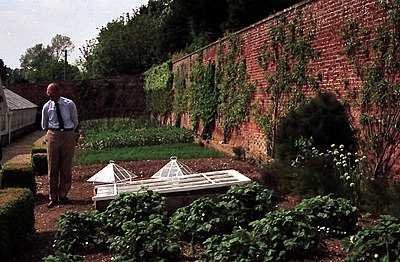
I am fond of 1800's history, and was pleasantly surprised to learn about the program "The Victorian Kitchen Garden". This apparently was a BBC series of the mid 1980's.

Source: Wikipedia on Harry Dodson
Back in the Victorian period (1800's) there were large walled gardens in each large estate in England. Food production was on a very local scale, and a team of people were employed as gardeners. All of this was new to me, but what I found especially interesting was to learn the tips and techniques from master gardeners of a hundred years ago. A time when there were no commercial fertilizers, few pesticides and a lot of attention to detail and the crop. There was no mono culture in these gardens!

The head gardener was one of the highest seniority staff members on the estate, and he was tasked with producing all of the food needed by the estate-- year round.

I have enjoyed the program, so I will organize links to the videos on you tube. I would caution you to beware of inappropriate content in the "suggested" videos area. It is sad to have good resources thrown in with the filth of a morals lacking society. Click the video link, and go full screen as soon as you can, and of course skip the ads if they are thrust upon you.

Note as of Jan 21, 2013, these video links are not working. The interview with Thoday is working which would give you an idea about the program.

April
May (first 10 mins)
July part 1, July part 2
September part 1September part 2
November

Wednesday, July 25, 2012

Blueberry Pie

Our blueberry plants are doing well. All have survived so far. I can only hope for the future to include a lot of blueberries! We picked / purchased 150 lbs this year. We froze most of them, and canned some as well. Our canning method was unique to us, being recommended by a friend. We took sterile jars, and dry packed them with fresh, cleaned blueberries. We pressed them down as much as we could to completely fill the jar, yet without smashing them. Then place the jars into the oven, and bake at 250 for 30 mins. The berries cook down inside the jars, and the end result is about 1/2 full of canned berries. The jars seal, and stay canned. It is a simple way to preserve blueberries. Sunshine says the skins of the berries are slightly more tough with this method, but the ease of processing makes the method a winner.

With fresh blueberries, I suggest you make a blueberry pie. I just did, and mmmm, good! I got this recipe from Sunshine's sister, so credits to her and thanks for the great recipes. I love crusts, and now that I have made a few pies, I know why. They are not all that healthful ;)

Crust:

mix well dry ingredients:
  • 3 1/2 C white flour
  • 1 1/2 t salt
mix well wet ingredients:
  • 1 C oil
  • 1/2 C cold water
Mix dry and wet ingredients together. Stir into dough quickly, but don't stir too much as that would make the crust tough. You want a consistent texture to the dough. Separate out 1/2 for the bottom crust, and the other half will be for the top crust. Roll out on a dough sheet, and set the pie pan on the dough, and flip it over. Remove the dough sheet. Roughly trim the excess off the pan, and settle the dough in place. Roll out the top in preparation for placement over the filling.


Filling:

6 C fresh washed blueberries
4 T corn starch
3/4 C sugar
1/8 t salt
1 T lemon juice


Place the filling in the pie pan, and place the top crust on the pie. Crimp the edges to join the top and bottom crust. Poke some decorative holes (fork pricks) into the top crust to allow steam to escape. Fashion some strips of aluminum foil to wrap around the crinkled edges of the pie (to keep them from getting over cooked.)

Bake at 400 for 45 mins. Remove the edge foil, and finish baking for 15 more minutes.

If you need any help eating the pie, just invite us over ;) Happy eating.


P.S. Apple Pie Filling:

For this fall when apples come on (we hope there are some apples that made it through the spring frosts), we suggest apple pie! Use the same crust and method. The filling directions are below. I tried it with canned chunky apples, and it was hailed a success:

5-7 large apples, or 1 1/2 Q canned

3/4 C sugar
3 T white flour, or 3 T starch
1/8 t salt
1/2 t cinnamon
1/4 t nutmeg (optional)

Place cut apples in the pie pan, mix ingredients over apples, and top with 1 T lemon juice.

Monday, July 16, 2012

Fruit Tree Pests

I have been told that one of the hardest areas in farming organically is fruit trees. Pests love fruit trees, and especially the developing and mature fruit. Insects and animals can pose serious challenges. Let's explore these, and suggested treatments.


Insects

A relative has in the past had extensive damage from several insects in his orchard. He has developed some creative solutions. He uses an electric zapper with two types of light source (florescent and incandescent.) Below the zapper he places a small wading pool of water, and wets the water with a detergent. In his experience, many moths and insects will be attracted and stunned, but not be killed. When stunned, the insect will fall to the ground, and with the wading pool below the moth kill is dramatically increased. Helpful insects are not strongly attracted to the zapper, while moths are strongly attracted. Moth pupae are damaging to many crops on the homestead. One person told me they could not think of a beneficial moth-- all are destructive to something. They love to fly at night, and if you have electricity, you can zap / drown a lot of them.

Another promising control measure is a clay product called Surround. It coats the tree and fruit in such a way as to confuse insects and camouflage the fruit which limits infestations. This product can be washed off with rain, and has to be applied weekly.


Peach Tree Borer

Traps can indicate the presence of adult moths, and once present, you will soon have eggs on the lower part of your peach trees. The eggs hatch in 7 days, and the larvae descend to ground level and burrow into the bark. Control measures applied to the tree need to be precisely timed to catch the eggs or larva before penetration below the bark.

Some farmers are convinced that the bug zapper has eliminated the peach tree borer damage. This moth is active in the day, but I have read reports that they mate at night, and therefore would be susceptible to the bug zapper.


Plum Curculio

This small snout beetle, 1/4 inch long, dark brown in color with patches of white or gray, lays its eggs on developing fruit, and the larva will burrow in and often destroy the fruit. Home gardeners can help reduce future problems from the Curculio by picking up the damaged apples as they fall off the tree and destroying them before the adults emerge. In apples, the larvae will only complete development in fruit drops.

Animals

Birds can quickly ruin a crop of mature fruit. I have a friend who watched a bird go from peach to peach throughout an entire tree taking one gouging bite from each nearly mature peach. The bird was doing great damage, and not eating hardly any of the fruit to become satiated. In a short time, such damage will rot and spoil the entire peach. Netting the entire tree is suggested if you have this type of damage. It is almost impossible to keep the birds out otherwise. Select a netting size that will not entangle the birds that land on the netting.

Strings draped through the tree foliage has been reported to discourage crows from staying in the tree.

I have seen electric wire around the trunks of fruit trees to discourage squirrels and similar from climbing the trunk to destroy fruit.

Thursday, May 10, 2012

Creating an Orchard

Fruit is wonderful, flavorful, and healthful! If you get fruit varieties suited to your climate, you will have a much easier return on the investment of time as compared with vegetables. Fruit trees do not have to be coaxed to life each year.

Just as in my article: Creating a Garden, you have to prepare the ground of your orchard before you plant. Take special care to add mineral nutrients to make your soil a perfect location for a tree to thrive. In addition to these suggestions, I want to provide some planting guidelines and spacing suggestions for your orchard.


Orchard considerations
  • Some trees need partners to pollinate well. Some trees are male and others female, and these surely need pairs to be successful.
  • There are different tree root stocks which will help control the size of the tree. You need to plan your orchard spacing with this information in mind.
  • How you plan to cultivate weeds, irrigate and harvest your fruit may influence your inter-tree spacing within the row, and the space between the rows. Orchards take a lot of ground, so plan out the grid and prepare the holes before you purchase trees.
  • If you are wanting to go organic, or at least avoid toxic chemicals as much as possible, consider purchasing disease resistant trees. (See this reference also.)
  • Orchards need attention at specific times of the year. An orchard is not something you plant and forget till harvest. There is something to do each month and some months, there are a lot of things to do. You need to be able to devote time to the trees for watering, training, insect control and pruning.

Propagation
  • You may want to propagate free stock. Any tree cultivar less than 17 years in production may be under trademark, and should not be propagated without permission and payment of royalty.
  • Starting fruit trees is not hard. Root stocks are selected for their vigorous growth. The grafted stock, or scion is also easy to grow. With one root and one scion tree source, you could have hundreds of grafted trees in a period of a few years.
  • Some trees and bush varieties grow directly on their own root stocks, and are easy to self propagate and share with others.
  • Vines, berries, and all of the trees are readily propagated. Find examples to take terminal clippings from. The normal pruning process will yield a large quantity of new starts if wanted.

Apple tree just after planting.
Spacing

I have enjoyed walking through surrounding orchards, and observing the pruning methods, and orchard layout. The spacing would depend on the type of root stock which determines the size of the adult tree: dwarf, semi-dwarf or regular.

Fruit trees need a fair amount of space. For the small orchard like ours, I would assume you will be looking for semi-dwarf root stock varieties (where possible.)  I do not suggest you work with dwarf stock unless you really have no room for any trees. Dwarf root stock stunts the tree so badly, that you have tree health issues ongoing. We chose to lay our orchard out on a 15 foot grid. This will be just right for the semi-dwarf trees, and a bit small for the regular sized cherry trees. We decided to place the cherry's on the north side of the orchard plot so as they grow they will not shade the other trees too much. Some full sized apple trees could use a diameter of 25 feet, so know your root stock, and plan your spacing accordingly.


Orchard Planting 2012

When looking to plant our orchard, we decided to focus on trees that were hardy and disease resistant. We wanted trees that would offer a low chemical spray requirement. Our selections are as follows:
  • Pear: Moonglow, Starking Delicious
  • Apple: Freedom, Crimson Crisp, Galarina, Goldrush x2, Gala-like Resista
  • Peach: SunHaven, Contender, Cresthaven, Glowhaven, Stellar Glowingstar, Stellar Blazingstar, Stellar Autumstar
  • Plum: Sugar/German, Mount Royal
  • Cherry: White Gold Sweet, Black Gold, Stella

Orchard Update 2016

The Apple trees and peach trees had their first real year last season. This year the peaches have come on thick, and it has taken days to thin out the thousands of extra peaches. The peach tree borers have been hard on the peaches. Several trees are affected, and it seems also that some of the early limb angles were not enough to prevent bark being impacted in the growing tree bark, making for what looks like very weak crotches. I will have to support these, and watch this closer with any future trees planted.

In May 2016, I planted three more threes on the west end of the rows. This will make the three rows from North to South:

1) Royalton Sweet Cherry, Sugar/German Plum, Mount Royal Plum, White Gold Sweet Cherry, Chinese Apricot, (dying) Stellar Autumstar
2) SunHaven Peach, Contender, Cresthaven, Glowhaven, Stellar Glowingstar, Stellar Blazingstar
3) Liberty Apple, Crimson Crisp, Galarina, Goldrush x2, Gala-like Resista

Orchard Update 2018

The tree layout for 2018 is by row:
  • 1: Pear: Moonglow, Moonglow
  • 2: Pear: Starking Delicious, Starking Delicious
  • 3: Apple: Freedom, Crimson Crisp, Galarina, Goldrush x2, Gala-like Resista (not doing well)
  • 4: Peach: SunHaven, Contender, Cresthaven, Glowhaven, Cresthaven, Cresthaven
  • 5: Royalton Sweet Cherry, Sugar/German Plum, Mount Royal Plum, White Gold Sweet Cherry, Black Gold Cherry (new), Stella Cherry
In the perspective of time, I would not plant any apple trees again (in my area). The diseases and pests make organic apples not worth eating (in my opinion), and conventional apples are readily available in our area.


Tree planting principles
  1. For maximum production, trees need deep soil ~ 3 feet deep.
  2. Many areas have a clay or hardpan under the surface, and this needs to be broken up and penetrated so the roots can develop and allow for proper drainage. Prevent a hard layer or clay glaze around the hole you dig. You want the roots to penetrate out of the hole into the ground beyond.
  3. When preparing the planting hole, care should be taken to not include so much mulch that the tree settles and the crown sinks below the surface of the soil line. The tree needs to be planted at the same depth as it was grown at.
  4. Do not let the roots dry out in the planting process. If bare root trees can not be immediately planted, the roots should be protected from drying out, perhaps even temporarily being planted.
  5. Add to the hole: mulch (leaf mould), top soil and the soil from the hole. Add some kelp powder or a small amount of sea salt for micro-nutrients. Do not fertilize a new tree.
  6. Deep in the hole, place a plastic pot upside down, a section of drainage tubing, or some object which can form an air / water cavity. This is not as needed in well drained soils such as sand.
  7. Add some rocks deep into the hole, but not a solid rock layer.
  8. Mound up the soil contents in the center of the hole, preparing a base for the tree roots to rest on.
  9. In windy and exposed areas, consider placing a large rock on top of the mound, around which with tree roots could rest and grow. The rock would serve as an anchor for the tree.
  10. Plant the tree to original soil depth, filling in around it with the soil mixture already prepared.
  11. Plant the graft union notch to the north east to help prevent sunburn on the graft.
  12. The soil line around the tree should be 1-2 inches above the surrounding soil. This is a slight mound around the tree.
  13. Water the tree with 5 gallons of water after planting to help remove excess air from the roots, and provide moisture.
  14. If the soil is heavy loam or clay, care should be taken to not drown the roots with too much water. Mixing soils as mentioned should remove this danger because of the mixture of the top soil and compost into the planting mix.
  15. Water the tree regularly (2 times a week may be a minimum in hot / dry weather.) The tree must be nursed to life and its roots will not be able to stand much stress. Make a circular watering basin around the tree at the perimeter of the roots and beyond to water the planting area. Do not have the water pool around the trunk.
  16. Mulch the tree 3 feet around the trunk to prevent competing weeds and hold moisture. The mulch can be wood chips or other mulch material, around 6 inches in depth. Do not mulch right up to the trunk as this could encourage crown rot and harbor pests that could damage the tree.

Initial Pruning and Training

Mail order trees may be initially pruned for you. If you buy local, the initial pruning will not be done, and you must prune the trees right after planting, so the branches and leaves are cut back to the level the disturbed roots can support. Bare root trees must be pruned to survive. How you prune depends on the type of tree. You want to prune to select the apical bud that will grow outward from the tree, rather than inward to the center.

On almost all fruit, it is important to train for wide crotch angles of at least 45 degrees. This measurement is from the trunk to the branch angle. A narrow crotch angle is weaker and more prone to break under the fruit crop load. Good healthy trees have crotch angles of 45 to 90 degrees.


Resources

Tuesday, March 13, 2012

Blueberries

Blueberries have gotten some good press about their health giving properties. As perennials, small fruits and berries will perform year after year without the startup work required for vegetables. Since we live in the north, blueberry fields are common in our area, and we have grown to love them.

Our plan is to plant 10-20 blue berry plants this spring. The biggest challenge we face is that our soils are alkaline, and as noted below, these plants love acidic soils. This will be a major challenge to change the soil pH around this growing area.


Growing preferences

Blueberries come from bushy plants that love boggy and wet areas. They do not want to be covered with water, but they do like to keep their roots moist. We have a wet area along the side of our field that we think would be ideal for our new blue berry plants.

They also like acidic soil, as is found in a bog. Your target pH is 4.5 to 5.5, and most soil will need amendments to assist in the lowering of the pH. Amend the soil to a depth of 14 inches by two feet wide. Pine needles, pine bark, elemental sulfur, ammomium sulfate and peat moss can lower the pH in your garden bed that will hold your blue berries. Canadian sphagnum peat moss has a pH of 3.0 to 4.5 making it an ideal amendment for blueberries. If necessary lower pH and supply nitrogen by adding 1 lb. of ammonium sulfate commercial fertilizer to 100 feet per inch depth of sawdust. Organic growers can use elemental sulfur and cottonseed meal or feather meal. It takes several months to a year for sulfur to lower the pH. Prepare blueberry planting site well in advance for best results.


Varieties

Follow this link for a beautiful chart of blueberry varieties. (web)

Elliott has one of the highest levels of antioxidants of all blueberry varieties.
     Once picked Elliott has a storage life of up to 12 weeks. (web)


Varieties we have planted in 2012, and updated in 2014 replacing a dead Bluecrop.

Duke         x1
Bluecrop    x9
Blue Ray    x10
Earliblue    x10
Ka-Bluey    x5
Chandler    x5


Planting and soil preparation

"Select a sunny location with well-drained soil that is free of weeds and is well-worked.  It's best to locate your blueberry plants in an area where irrigation is readily available as best results will be achieved by keeping the root zone moist throughout the growing season.

"Blueberries prefer acidic soils. A fail-safe way to grow blueberries in almost any soil is to incorporate peat moss into the planting medium. For planting directly in the ground, work up a planting area approximately 2½ feet in diameter and 2 foot deep for each plant. Remove 1/3 to 1/2 of the soil. Add an equal amount of pre-moistened peat moss and mix well.  (One 4 cubic foot compressed bale will usually be sufficient for 2-4 plants.)" (web)

Space your bushes from 4 to 6 feet apart with 7 to 10 feet between rows. Commercial farms space the rows 10 feet apart which is large enough for tractor access down the row. The home gardener can plant them 3 to 4 feet apart in any arrangement fitting the home landscape. Set at the same depth plants grew in container or ground. Planting too deeply will smother the roots. Little or no pruning is needed for the first two years except to remove broken or rubbing branches. Strip off all blossoms and fruits until the plant is well established (36 to 42 inches tall).


Mulch

Blueberries require mulch. For the first year mulch with fir, pine, or hemlock well rotted sawdust extending out 2 feet around plant to a depth of 3 inches so roots will not grow up into the mulch. After the first year increase mulch to a depth of 6 inches mounded around the crown. As plants mature extend the mulch out to the drip line. Mulch will gradually break down to help feed the plant and supply the high rate of organic matter blueberries need. More important, mulch provides a cool root run and conserves moisture, both requirements for blueberries. Other materials may be used as mulch such as composted pine needles or shredded leaves. General compost made from vegetable materials may be too high in pH for blueberries. Fresh grass clippings can heat up and damage surface roots. (web)


Planting History 2012

We ordered one Ka-Bluey plant online via a sale, and 4 more from another online site. The 30 other plants were picked up at a wholesaler, at a much better per unit price. The single Ka-Bluey came in the mail a week before we had scheduled to get the other plants from the wholesaler, so we put it in the ground on April 2. We were gone to a retreat for the next week, and there were some cold nights while we were gone. We watered well, and a friend also watered the plant, but when we returned, the once green leaves were brown red. I thought it was dying. Looking this up on the Internet, I see this is common for plants that were used to the warm, being transplanted into the cold of early spring to have the leaves turn red. This is the normal coinsurance in the fall due to cold temps. I hope the plant pulls through. Since we have been back to the homestead, I have protected the plant by covering it with an overturned bucket on the nights of frost danger.

10 Bluecrop ready for planting
We have waited to plant any additional plants till the 10 day forecast does not include the chance of frost. Hopefully we will plant the rest of the blueberry plants this Friday, April 13. Since our soil is alkaline, I wanted to dig a large hole and amend the soil with ag sulfur deeply. With the backhoe, I dug a trench 2 feet wide and about 3 feet deep. I will mix peat, ag sulfur, and compost and return the soil to the trench, and then will plant the blueberries with a generous amount of peat around its roots (say 2 shovels full).

We are planting the blueberries in 2 rows of 20 plants. We are setting our plants 4 feet apart within the row, and the rows 7 feet apart. We are not planning to need to drive the tractor down the row, and can therefore save the space, and have the rows closer together.


Pruning

"One of the biggest mistakes home gardeners make with their blueberries is lack of pruning. Aggressive, annual pruning will result in healthier, more vigorous plants and more prolific fruit production. Here are some simple tips:
  • Pruning is best done in the spring before the leaves come out.
  • Remove low growth around the base.
  • Remove the dead wood, leaving bright colored lateral branches. Cut out any short, discolored branches.
  • Continue pruning until you have removed 1/3 to 1/2 of the wood out your plants each year. Remember, this will promote growth and berry production so prune away!" (web)

Propagation

When you prune your blueberry plants, remember to save your clippings to start new plants. Clip the root end of the swig at an angle, and the top cut flat. Dip the angle cut end in rooting hormone, and plant in growth medium, and keep the atmosphere moist.

When roots have developed, plant in a location where you can protect it through the first winter. Some suggest building a mimi-greenhouse of plastic, straw and more plastic. This would sandwich the straw between the plastic to keep the straw warm, and preserve the thermal blanket effect.


Resources

Thursday, February 9, 2012

Pruning Fruit Trees

Pruning a fruit tree is a critical step for tree growth and fruit production. There is a variety of ways to prune trees, and some types of trees have different needs. I am a learner in this topic, so we will start with listing resources I am using to practice and learn techniques related to pruning.


Goals of pruning
  • Remove dead wood
  • Remove any crossing branches
  • Open the tree to get even sunlight and good air movement

When to prune

You do not want to do heavy pruning during the active growing season, but you need to take care that you do not prune just before a cold snap either. Pruning is reported to lower a trees cold tolerance. It is suggested that you prune trees just before they bud out which would be after the danger of really hard freezes and very low temperatures. The larger the tree, and the older the tree, the more able it is to withstand cold after pruning. Apples can withstand winter pruning better than peaches.


General methods and techniques

Apples

Cherries

Pears

Peaches

Plums
  • Plum trees should be pruned in the spring, to minimize fungus attack.

Monday, December 26, 2011

Diversity

When you are planning your farm, you need to think about diversity. Mono crop farming is not being self reliant. You are growing one crop, in the desire to sell that crop and then purchase what you need. While I don't suggest the goal is financial isolation, the model of years past was not mono crop farming. It is not sustainable or self-supportive if one crop fails, or you fail to find a buyer for your one crop. The idea of independence is harmonious with diversity. Farmers of the past may have had a cash crop, but they also had a personal garden to support the variety of food needs for their families.

Diversity is good for being able to supply all of your home needs. It allows you to offer this same diverse spread of food for your customers. It protects against a complete loss with one crop failure. Diversity allows more complete crop rotation, in mini-rotation cycles, and ultimately aids in soil-development.

Currently, we are participating in four areas of farm diversity as self support and cash crop income. Our current list is: 1) full spectrum vegetable crops, 2) perennial fruit crops, 3) plant propagation and 4) animals. Items we could add in the future: medicinal herbs, essential oils, candles, wood fuel, fiber arts, crafts, flowers (fresh or dried), CSA/ASC, farmers markets, road side vegetable stand, and I am sure the list could continue to even more diversity.


Vegetable crops: are naturally diverse, and we want to offer a balanced diet with our produce. Garden development has a lot of pre-work, in amending and healing your soil to be balanced, complete and mineral rich, good organic matter content, etc. Some vegetables will grow best in your area, and we suggest planning your balance from what your climate and area supports best. For homestead use, you will want to plan on your food preservation and storage capacity. For public sales, you will want to find the best interface in your area. Some venues to consider: road-side stand, CSA/ASC, restaurant contracts, grocery wholesale, and/or farmers market. You can consider the time of picking, and quickly chilling food in the field to preserve freshness.

Some farmers we talk with enjoy the CSA/ASC repeated contacts with their customers, while others find the weekly schedule rigorous to fulfill a weekly demand. While I am suggesting diversity, you need to start only what you can handle, and this likely means you need to ramp up what ever production level you want to commit to in a sane and family friendly way.


Perennial fruit crops: these range from easy to hard depending on the types of fruit to be grown, and the climate and pest pressures around your farm. In Michigan, it was common to hear of some fruit crop failure each year.

The list would include: apples, pears, peaches, apricots, plums, pomegranates, nut trees, grapes, raspberries, black berries, blue berries, strawberries, etc. The advantage of the perennial fruits is that they are generally more established, and require less frequent intensive care as compared to vegetable annuals. In some areas, fruit pests are a problem, and bringing organic fruit to market is a challenge. We need to educate consumers that surface imperfections are not the problem, rather insecticide drenched fruit is the problem.

Customer contact could be similar to the vegetable markets. I have seen one organic tree farm offer a "rent a tree CSA" in which you could purchase the produce to be harvested (and even harvest it yourself) from one specific tree. This makes a direct connection between the tree and the customer, which is very satisfying.


Plant propagation: is working with trees, bushes, ornamentals, etc, where you are multiplying a plant. The focus could be on developing stock for your own orchard, or to sell as a cash crop. It can still be diversified but time is the key. Taking cuttings, allowing them to root, grafting if needed, growing to sell-able age, will in total be several years.

Find markets for plants, and focus on what these markets need. Plan to offer your product at a good price when entering a new market, but establish being local to your advantage. Avoid the rush to the bottom when it comes to price. You could sell retail to the public, and consider mail order options as well. I would think that wholesale to a store would provide more volume, especially if you are in a very remote or rural location.


Animals: are a long standing tradition for historic farms. Farm animals were used to assist with farm work, like oxen and horses to production animals such as chickens and bees. There may be interest in milk or hair products (fiber arts) from various animals. Some animals would require significant infrastructure and tools, such as dairy barns, and milk processing facilities, or bee hives and tools. Expand as your knowledge can afford and as the Lord opens the way.


So, how can you diversity? Consider the options available to you, and the income sources that may avail you a living and support your budget. I encourage diversity as long as you can effectively give adequate attention to the existing operation. The word for today: diversity.