Tuesday, February 28, 2012

Greenhouses

A greenhouse is a weather protecting structure for your garden plants. It could be as simple as a cold frame (a low wooden box covered with glass) to a tube frame, plastic covered high tunnel, to a stud framed glass house. With a greenhouse it is easy to extend your growing season a month earlier in spring, and a month later in fall. Depending on your greenhouse, and your crops, you can extend your harvest into winter.


Uses
  • Seed starter greenhouse
  • Forth season production
  • Flower / cash production

Important concepts
  • base temperature
  • optimum temperature
  • temperature integration
  • photo period
  • irradiance
  • poly sun degradation

Design considerations

The ground warms and cools with the surrounding temperatures. As we cover the ground with the greenhouse, the earth under the house can offer stored heat. Utilize this heat battery to your advantage. In sunny areas, the solar input of energy will be more significant than earth heat radiation. If you are using glass for your glazing, then you will want to orient the angle of the glass to the perpendicular to the elevation of the sun during the winter. This angle is your latitude at the winter solstice. You want the angle of incidence to be low so that most of the light will completely penetrate the glass, and not loose some of it through reflection.

Using a GPS, property map or Google Earth, determine the latitude of your location. Add between 10 and 20 degrees to your site latitude to determine the orientation of your greenhouse glazing. For instance, if your latitude is 35 degrees north, your glazing should be angled at a 45 to 55 degree angle.


Heat storage / sources
  • Water stored inside the greenhouse, in black containers to absorb as much daytime heat as possible. This heat would then be radiated at night to moderate temperatures. One friend of ours has used 55 gallon metal drums full of water in the center of their greenhouse with planter boxes on top of the drums. Another has water containers on the backside of the greenhouse. Another greenhouse we reviewed had a small pool of water within and under the floor.
  • Rock mass as a thermal heat sink. Another greenhouse we have reviewed has a rock wall on the north side of the lean-to greenhouse. Another example is a solarium made with massive amounts of rock as thermal mass.
  • Earth-air tubes are tubes buried deep in the ground and air passed through the tube to take the constant heat from the ground into the air and then into the greenhouse. Electricity is needed to move the air.
  • Below ground radiant heat, with heat being added from a boiler or solar heater.
  • Wood stove heater within the greenhouse.
  • Greenhouse lowered into the surrounding ground, to encourage more earth-heat coupling.
  • Cold sink trench within the greenhouse to hold coldest air down within the soil.

Resources

Wednesday, February 22, 2012

Spring Planting

The days are ticking down toward spring planting. This is exciting! I would like to outline the steps our farm undergoes in late February to get ready for spring planting. We start planting seeds indoors on the week of March 8th. This is based on our zip codes last frost date. We generally have our last frost around May 3. We don't set out tender plants till May 10 (and then look at the 10 day forecast just to be sure). Remember that frosts can sneak up on you on clear sky nights without weather forecast warning. I have even seen light frost with 10 degrees safety margin in the forecast.

If you have not yet obtained your seeds, now is the time! Following are the seed companies we have used over the past several years:

It is also time to setup your start trays in which you will start your transplants. We use recycled 4x8 foot drop ceiling light fixtures (4 bulbs), placed on 4x4 inch blocks which lifts the light fixtures just above the trays. The light should be as close to the plant as possible to give the maximum light exposure. If your plants are tall and leggy, they do not have enough light.

We have used grow heating mats in the past. I found that if I cover the light fixture with a blanket, the heat of the light fixture warms the under contents adequately as measured with a soil probe thermometer. Be careful if you try this. Make sure you don't have too much heat creating a fire danger. I set up several test configurations on my seed starting setup, and measured the temperatures obtained. The variables: no light or added heat, light on, heating pad and blanket cover. All of these measures were taken on the same light unit, at a room temperature of 60-70 degrees. In my testing, I found:
  1. Soil at room temp, no light or heat added    60 deg
  2. Heating pad on only                                    80 deg
  3. Heating pad on covered with a blanket       86 deg
  4. Light on only                                               62 deg
  5. Light on covered with a blanket                  82 deg
  6. Light on + heating pad on                           84 deg
  7. Light on + heating pad on + blanket            96 deg

When we plant, we want to remember the goal is a progressive harvest, and this means not planting all of the cabbage for a single harvest, but progressive plantings. Elliot Coleman, in the book Four Seasons Harvest, suggests this schedule on page 88:
  • Beans - every 2 weeks
  • Beets - every 2 weeks
  • Carrots - every 2 weeks
  • Celery - twice: early spring, and 3 months before fall frost
  • Corn - every 2 - 3 weeks (some varieties vary in length so keep this in mind)
  • Cucumbers - two or three plantings: at month intervals
  • Lettuce and greens - every week or two, extending the entire season
  • Peas - twice: early spring and midsummer
  • Radishes - every week
  • Spinach - every week during spring and late summer
  • Summer squash - two or three plantings at month intervals

We have created charts for planting dates based on the projected last frost date in spring. I will describe how we have constructed our chart, and then you can modify the specific dates based on your last frost date. I will only list the first planting of a variety here, though remember the suggested schedule above related to progressive plantings.

In the chronology below, the word "start" means seeding a transplant tray to start seedlings in side under lights. "Transplant to soil" means taking some of these seedlings and transplanting these into their final location in the garden. "Plant in soil" means we seed directly to the garden. We do not notate seedling transplants to larger pots indoors, but in several cases, this is needed. We have eggplant inside a long time before we set it out, as an example. We largest pot we use inside is 1 gallon.

Eight weeks before last frost date (Mar 8), we start the cold crops: cabbage, cauliflower, kale and lettuce.
Seven weeks before last frost date (Mar 15), we start egg plant and broccoli. Eggplant is a slow growing, warm loving plant, but it needs a long growing time to get it to harvest, so we start some really early. Onions can be planted in soil.
Six weeks before last frost date (Mar 22), we plant in soil: arugula, spinach and peas. 
Five weeks before last frost date (Mar 29), we start endive and turnip. We transplant to soil: cabbage, cauliflower. Plant in soil: radishes. 
Four weeks before last frost date (Apr 5), we start peppers and tomatoes. We plant in soil: beets and potatoes.
Three weeks before last frost date (Apr 12), we transplant to the soil: broccoli and lettuce.
Two weeks before last frost date (Apr 19), we start beans. We plant in soil carrots and chard.
One week before last frost date (Apr 26), we start cucumbers, summer squash and melons.
Week of last frost date (May 3), we start okra, another warm loving plant that we will transplant to soil in 4 weeks.
One week post frost date (May 10), we start pumpkins. We transplant to soil the beans. We plant corn and a successive planting of beans into soil.
Two weeks post frost date (May 17), we transplant to soil cucumbers, summer squash and melons.
Three weeks post frost date (May 24), we transplant to soil peppers and tomatoes.
Four weeks post frost date (May 31), we transplant to soil the okra and pumpkins.

While the seedlings or transplants are being established in soil, more diligent effort with weeding will be required. As soon as the plants are large enough to withstand some side dressing of mulch, apply this and add to it as you are able. This will do wonders for controlling your weeks, and lessening your hoeing work.


Soil

I wanted to have you think about the soil you use for your starter trays. We have used commercial starting mixes with good results in the past. Some references talk about using pasteurized soil, where harmful bacteria have been killed, but not so hot that the organic material is turned to charcoal. Be aware that if you use untreated garden soil, you may have more problems with damping off when used in a greenhouse or starter house application. I don't have a lot of experience pro or con, but pass on the word of caution from others.


Hardening off

When plants are started inside or in a greenhouse, the plants are tender. If placed directly outside, they may be burned and die. In our experience there are two key issues: light intensity and stem strength. New plants that have been inside have been shielded from the full intensity of the sun, and if the plant is directly transplanted outside with no hardening, the plant may be set back by leaf burn. Stem strength is also an issue, as indoors the plants are not subjected to wind stress, and stem strength develops based on need. I have sometimes set an oscillating fan to blow across the plant trays. I set plants out in the middle of the spring day that is sunny and warm for a limited amount of time. This time I increase an hour a day leading up to the date we transplant to soil.


Transplanting

When you are ready to transplant to soil, you will want to mark out the transplant bed in advance. We use a transplant trowel which is perfectly shaped to open the soil to receive the new plant. Take care to adjust the roots and rootlets to prevent root ball. Gently firm the soil around the plant, as this will improve capillary action to bring water to the roots. Generally you will want to plant the seedling at the same soil depth as they were grown prior. An exception is tomatoes, which will root out of a buried stem. There may be benefit to transplanting to the base of the first leaves.


Resources

Sunday, February 19, 2012

Maple Syrup

If you live around maple trees, you could tap the trees to gather sap, and boil this down to maple syrup. Generally this is done in the north, as here we have a longer season of usable sap flow. You can collect sap on any maple tree when the sap is flowing and before the tree buds out.


Time to tap

I cut off a branch from a maple the other day, and a stream of sap came flowing from the wound. It is really hard to believe that in early February, we are having sap flow. But the trees have good thermometers, and this winter (2012) has been unusually mild in our area. We have had regular sunny days, and often temps into the 40's or above. The ideal temperature for sap flow are day temperatures above 40 and night temperatures below 32 F. The tree pumps up sap to get the branches and buds ready for spring, and during freezing temps, the sap is drawn back down to the roots for storage. This pumping action is ideal for collecting sap as it passes by the tap hole. We have some cold temps this weekend, but after that the 10 day forecast looks like above freezing in the day, and below at night. Perhaps it is now time to tap. Note this winter I have had the concern of tapping too early. If you tap too early and it gets cold and the sap flow stops, then the taps could dry up and be sealed off, causing you to miss later spring flow. For us a good sap season is 4-6 weeks, and for our area the good sap flow starts mid February to early March. Some areas like Vermont have 8 weeks or longer of sap flow.

Once the tree begins to open the leaf buds and the photosynthesis products return in the phloem (downward flow channels) it gives an unpleasant taste to the sap. So the available window is started by day time temps above freezing, and ended when the trees bud out. Some make syrup seasons are short, and some are long, it all depends on the weather.


Tools

The tools are really very simple. You need a drill that matches your tap size, some tubing unless you can hang your buckets on the tap, and a large flat pan to boil the sap down. It really is that simple. I tap low on the tree, and use tubing to drain the sap into food grade 5 gal bucket set on the ground. I found that one tap will offer 0.5 to 1 gallon a day, depending on the size and condition of the tree and the weather. You will want to check on the buckets each day. It is no fun discover an overflowing bucket. You hate to waste the sap!

If you use plastic buckets to collect sap or store syrup, be sure the buckets are food safe containers.

To set the spile, drill a hole angled slightly up, so the sap will run out. Drill to a depth of 1.5 inches for 5/16-inch spiles. Place the spile into the hole and lightly tap it in place with a hammer. If the sap is running, it will start coming down the spile within a matter of seconds.


Number of taps per tree

When you work tapping, you really can see how dynamic the sap flow is. You get the idea that you are tapping into the trees blood supply. You do not want to drain the tree of too much sap, or you could hurt the growth of the tree.
  • Tap only trees with a diameter larger than 12"
  • You can place two taps in trees with a diameter larger than 20"
  • Limit yourself to three taps total in trees with a diameter larger than 26"

Boiling to syrup

Sap will spoil. It is dilute sugar water, and you can not really just leave it sitting. I found I had to process it daily.  If you have 60 taps, giving 0.5 to 1 gallon each, then you may have around 40-50 gallons of sap each day. We purchased a 2' x 4' evaporator pan, which we can make a fire under to boil down the sap. It takes us around 6 hours of flame to boil down 50 gallons to syrup concentration. The ending volume would be around 1 gallon of syrup.

Now this is an interesting point that I did not know before working with maple trees: not all maple trees have the same sugar concentration in their sap. There are genetic differences, and there are differences depending on how much light the tree is exposed to. We have maple trees in a forest, and our light exposure is basically the top of the tree. Our average sugar concentration is weaker than a tree in a fence row, obtaining light from all sides. Generally you hear of 40:1 ratios, and I calculated our ratios at 50:1. This means that I have to boil down 50 gallons of sap to get 1 gallon of syrup. The effort required for maple syrup is in moving the sap around, and in boiling down the sap to syrup.

My sugar shack is not a formal building, but a rather crude covering over a fire pit evaporator pan. I have built a low to the ground block frame on which to set the evaporator pan. Inside the concrete blocks, I set fire bricks to help protect the block from heat. At the far end, I have created a chimney to both draw the fire across the pan and smoke up and away from the syrup. I have supported the metal tube chimney with guy wires. There are 2 sheets of plywood supported on poles to provide cover from rain or snow.

I am ready to boil a batch when I have 30 to 50 gallons of sap ready to boil. I fill the evaporating pan with sap and light a fire in the fire box. Some like to preheat sap as possible to speed up the boiling process. Occasionally skim the surface of the boiling liquid to remove surface foam and other materials.

With a good fire, my pan will produce a huge rolling cloud of steam. Do not try boiling sap down indoors. If you are tempted to do so, just think about spreading 40 gallons of water around your kitchen. In such cases, I have heard of drywall falling off the ceiling, wall paper falling off, or mold taking over the home. The initial boil must be done outside or in a sugar shack!

Continue the process until the sap changes color and the boiling point begins to rise above the boiling point of water. Finished syrup boils at nine degrees (9° F) above the boiling point of water. As the temperature of the boiling sap approaches this point, boiling should be carefully controlled to prevent burning and overheating. If you are able to use a hydrometer or refractometer, you are looking for 66+% sugar. 67% sugar will form crystals over time on the bottom of the container, but I see that as some insurance against mold, and the crystals are edible.

Tear Jerker Syrup Burn
We do not take the sap to completion in our large wood fired pan. We get it close to final concentration, and then drain it off, and do the finishing boil on a smaller scale where we can monitor it more carefully. A wood fire is not a precise heat source, and you surely can not "turn it off" at a moments notice. There is real danger of over heating your syrup if you are not very careful. After tending a fire for hours, you do not want to burn a batch. This has happened to me, and I hope to never experience it again! Note: it is really hard to clean up your large pan from burned syrup.

I have the habit of always having a few gallons of fresh sap on hand to add to the pan if needed. If you are being called away from tending the pan, add more sap. It may stop the boil for a while, or leave you with weaker syrup than you hoped for this first stage, but at least you will not burn the batch.

When you finish off your syrup to the proper temperature or concentration, you will notice some solids that come out of suspension. There is a gritty particulate called "sugar sand" that you can filter from your syrup. Some batches have more than others, but it may surprise you how much sugar sand you will strain out. It is common for the maple syrup to bubble up and boil over as it approaches the final concentration. This last step requires constant attention.


Filtering & Storage

If you allow the raw syrup to set for a day or two, the sugar sand will settle to the bottom of the container. I have dipped pure syrup from the top of the settling pot, and processed it to finished syrup. To be most efficient with removing the remaining syrup from the settled sugar sand, you will want to filter it. To filter the raw syrup, heat it to 190 degrees, and pour it through pre-filters and finishing filters. These three filters are set on top of each other: 2 pre-filters, and 1 finishing filter. These filters are reusable year after year. The batch should be small for the syrup should remain hot for it to efficiently move through the filtering process. Some people have the filtering setup be within a pot that has a low heat applied, so that the syrup being filters remains hot.

If you heat the syrup above 200 degrees, more sugar sand can precipitate from the syrup solution. So in the finishing process post filtering, you want to heat to 190 to sterilize the syrup, but not heat above 200.

Once the syrup is at the proper concentration, it can be stored in the refrigerator till you are ready to permanently can it. We have found a bottle of syrup with a small amount of mold on the top surface. I measured the concentration of this batch, and it was close to 70 % sugar. This means that the ideal 67% sugar content will not prevent mold. You have to sterilize the syrup for storage in any long term storage. We plan to sterilize pint canning jars in the oven, and pour in syrup heated to 190° F. Place filled and capped containers on their side or upside down so the hot syrup sterilizes the lid or cap. After cooling, store in a cool, dry place.


Time Line for 2012
  • Feb 9:   Sterilized spiles, T's and tubing.
  • Feb 15: Laid out the location and dimensions of the sugar shack: 6x8 feet. Set 9 taps. Sap is dripping.
  • Feb 16: Set the vertical poles and leveled the top plate of the sugar shack. Set 7 new taps. Sap is dripping. Collected around 6 gallons from the 9 taps of yesterday.
  • Feb 17: Finished fire box placement. Set 3 new taps. Started first boil of 14 gallons sap.
  • Feb 19: Arch complete with firebrick and chimney set in mortar. First boil of 35 gallons late in the afternoon. I have stoked the fire, and will let it burn out tonight. Not enough boil time to worry with a scorch so I can leave it unattended. (Pictures coming when I clean up the new sugar shack.)
  • Feb 21: Ate our first syrup on waffles. MMMMM good. Set more taps today. Total of all taps now flowing: 39. Boiling down around 50 gals now.
  • Feb 22: Third boil burned ;(. Now working to clean up the pan.
  • Feb 29: Boiling again. I have quite a sap backlog! All buckets were full. Finished the roof on the sugar shack.
  • Mar 2:   Finished all of the backlog and current sap, with all buckets empty on the trees. 4 gallons of excellent grade syrup! That was the longest boil we have done to date!
  • Mar 6:   Boiling again.
  • Mar 12: Last collection and boil. The sap is not as clean now as the first run, and the weather has warmed significantly. Buds are swelling, and we will pull the taps today. Total take in syrup was close to 10 gallons for our season.

Resources

Monday, February 13, 2012

Micro Greens & Sprouts

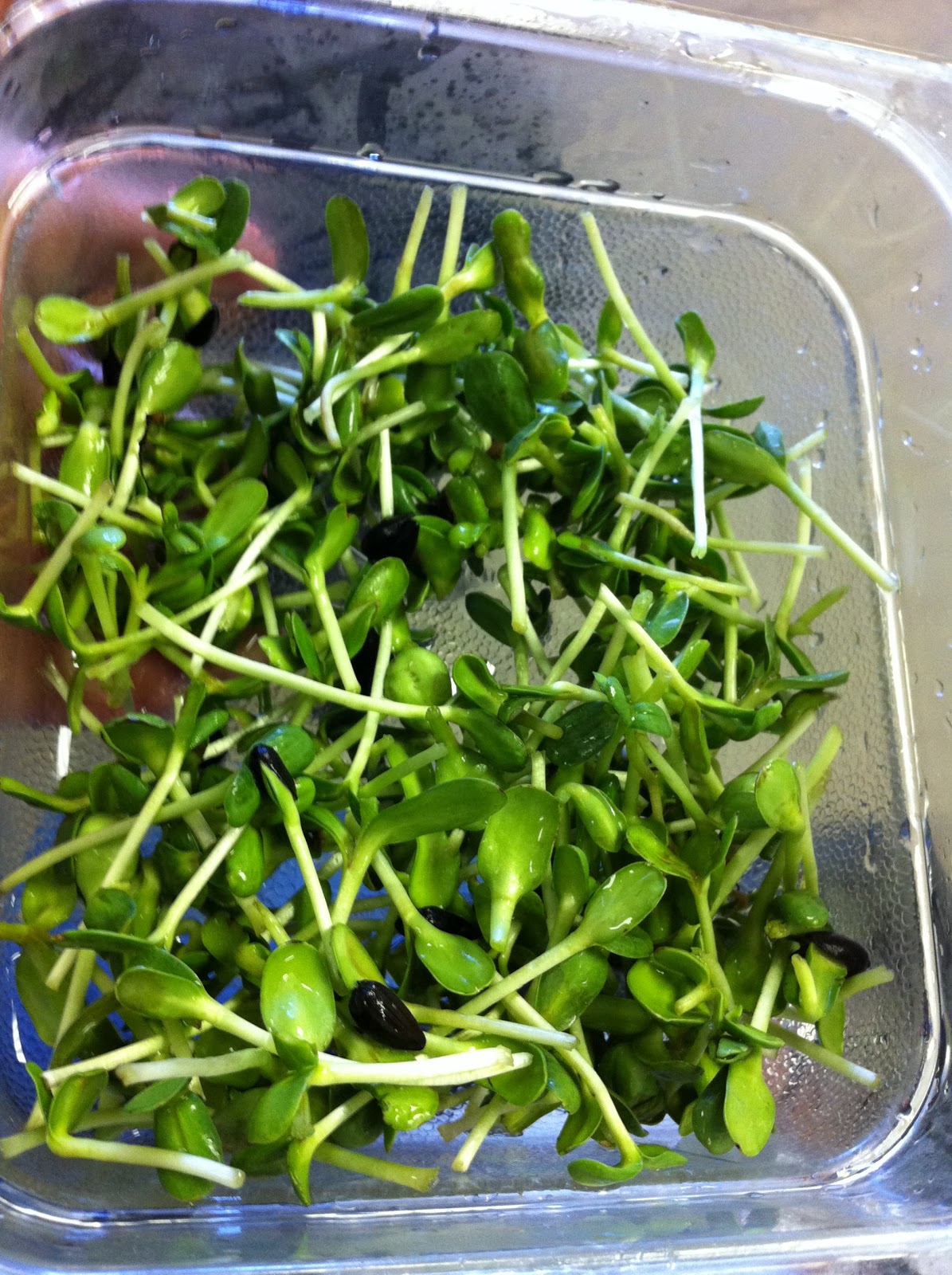
Microgreens are tiny leafed vegetables. Microgreens are just baby vegetable plants, used as greens. They are beyond sprouts stage, and are harvested when less than two inches tall. Some call them "vegetable confetti."

Commonly grown varieties of microgreens include: Amaranth, Arugula, Beets, Basil, Cabbage, Celery, Chard, Chervil, Cilantro, Cress, Fennel, Kale, Mustard, Parsley, Radish, and Sorrel. Several varieties can be mixed together to create combinations of tastes, textures and colors. The crops used for microgreens usually do not include lettuces because they are too delicate and wilt easily. Both baby greens and microgreens lack any legal definition. The terms "baby greens" and "microgreens" are marketing terms used to describe their respective categories.


Health Claims

There are many Internet sites that claim superior nutritional benefit from eating microgreens. As outlined in an article, Fresh Origins points out that most of these have not been backed up by scientific nutritional analysis. We need to be cautious about calling microgreens the next "wonder" food.


Why?

So why the interest in microgreens? For one the flavors of these small plants are almost explosive. You can enjoy a dazzling array of new flavors. Plants are at their absolute peak of flavor intensity at the microgreens stage of life.

The greens are easy to grow indoors, in a greenhouse or in a garden. Some refer to microgreens as the perfect counter-top gardening.

Chefs favor microgreens as a garnish, but these plants are versatile enough to be used as a sandwich topper, salad, in a soup or as a centerpiece to a main dish.


Growing Microgreens

Often microgreens are grown in trays with the seeds being dense enough to fill the tray with greens (as in the first image in this post). Many plants will grow fine with a mesh or fiber bedding and water. You can place around 2 cups of slightly acidic water in a tray with your seeds. Keep them in the dark for several days, and then expose them to light to green up for harvest.. A few plants do best with actual soil, such as sunflower, buckwheat, pea, cilantro and beet.

Various crops will be ready for microgreen harvest from 10 days to several weeks. You can experiment with the size of greens you prefer, and harvest as you desire. Since the plants will continue to grow, you have a range of sizes to choose from.

Sunflower, buckwheat, beet and pea all need to be pre-soaked in cold water.  Each should be soaked for 6 to 8 hours, except for beet seeds which should only be pre-soaked for an hour or two.

Amaranth, Bok Choi, and arugula do not like full sun. They do best with indirect light.


Sprouts

Sprouts are germinated seeds and are typically consumed as an entire plant (root, seed, and shoot), depending on the species. For example, sprouts from almond, pumpkin, and peanut reportedly have a preferred flavor when harvested prior to root development. Sprouts are legally defined, and have additional regulations concerning their production and marketing due to their relatively high risk of microbial contamination compared to other greens. Growers interested in producing sprouts for sale need to be aware of the risks and precautions, and oversight required by the FDA.


Resources

Sunday, February 12, 2012

Recipe: Curing Olives

If you have access to raw olives in your area, as we did when we lived in California, you should consider curing them yourself. The process is not all that hard, and quite fun to have buckets full of olives, rather than just a small can. We still have some treasured cans of home cured olives.

We have found that curing olives is easy. The suggested times are approximate, and if you go shorter or longer, the process is very forgiving. The times listed are for moving the process along efficiently. If you had to let the olives sit in a mixture hours longer, it really would not matter.

Uncured (raw) olives have a very strong, bitter taste. This can be soaked out with regular water changes over a months time. A much shorter method would be to immerse the olives in a lye solution, as described below. Take precautions when working with lye. Lye can cause burns. Wear chemical-resistant gloves and safety glasses whenever you're working with lye. The lye is a strong base, and nutralizes the raw olive acid. Once pH neurtal, you will want to infiltrate the olives with salt for taste. Then you can preserve the olives for later use.

It helps if you separate the olives into groups of similar size and ripeness. The black raw olives will cure a little faster than the green raw olives. Another benefit to sorting when the olives are raw is that the olives are easier to handle as firm and raw rather than after they are cured and soft.


Recipe
  1. Mix 4 T lye in each gallon of water. Be sure the lye is completely dissolved. Cover the olives with the lye solution. Stir occasionally to be sure the olives on the surface are completely cured. Let the olives soak for 48 hours.
  2. Pour off the lye solution and rinse the olives. I found the lye and the fat made soap suds when rinsed.
  3. Mix 2 T lye in each gallon of water, and again cover the olives with this solution. Stir occasionally. Let the olives soak for another 48 hours.
  4. Cut into a few olives to see if the lye has reached the pit. You can see the penetration of the lye as a color change in the flesh of the olive. If the penetration is not to the pit: rinse, and prepare a fresh lye solution as in step 3. Let the olives soak for 6 to 12 hours and test again.
  5. Rinse olives thoroughly for 24 to 48 hours by changing the water 4 times a day. This will wash out the lye and you can test to see if the lye is gone by tasting an olive. If there is a very little of the lye left, it will be washed out in the next few steps which adds salt to the olives.
  6. Mix 2 T salt per each gallon of water. Cover the olives and let them soak for 24 hours.
  7. Rinse well. Mix 3 T salt per each gallon of water. Cover the olives and let them soak for 24 hours.
  8. Rinse well. Mix 4 T salt per each gallon of water. Cover the olives and let them soak for 24 hours.
  9. Rinse well. Mix 5 T salt per each gallon of water. Cover the olives and let them soak for a final 24 hours.
At this point, the olives are cured, and ready to eat. You can refrigerate the olives and eat them fresh for several weeks. If you have more olives than you can use in this time period, then the olives should preserved in brine or by being canned or frozen.

Since you have removed the acid from the olive in the curing process, you would need to can then in a pressure caner: for a quart: 10 lbs pressure for 30 minutes. If you are at altitude, remember to make a time correction.

If you want to preserve the olives in brine:
  1. 3/4 C salt per gallon of water                    1 week
  2. 1 3/4 C salt per gallon of water                 1-2 weeks
  3. 1 3/4 C salt per gallon of water                 Put into jars and exclude air
Note that if you preserve your olives in brine, they will be too salty to eat. You will want to place the olives in fresh water to draw some of the salt out before consumption.

We really enjoyed working with olives, and would continue if we still lived in California. At our high point, we were processing 50 gallons of olives at a time. Some time is required, but not a lot. The time would depend on the volume your are having to rinse, perhaps 5 minutes per 5 gallon bucket. I found placing a garden hose in the bottom of the bucket, and allowing the water to overflow the bucket would keep most of the olives in the bucket, and after a few minutes, they would be fully rinsed.

If you have access to olives, cure them yourself!

Thursday, February 9, 2012

Pruning Fruit Trees

Pruning a fruit tree is a critical step for tree growth and fruit production. There is a variety of ways to prune trees, and some types of trees have different needs. I am a learner in this topic, so we will start with listing resources I am using to practice and learn techniques related to pruning.


Goals of pruning
  • Remove dead wood
  • Remove any crossing branches
  • Open the tree to get even sunlight and good air movement

When to prune

You do not want to do heavy pruning during the active growing season, but you need to take care that you do not prune just before a cold snap either. Pruning is reported to lower a trees cold tolerance. It is suggested that you prune trees just before they bud out which would be after the danger of really hard freezes and very low temperatures. The larger the tree, and the older the tree, the more able it is to withstand cold after pruning. Apples can withstand winter pruning better than peaches.


General methods and techniques

Apples

Cherries

Pears

Peaches

Plums
  • Plum trees should be pruned in the spring, to minimize fungus attack.

Monday, February 6, 2012

Garden Recipes

I love food. I love growing it. I love eating it.

Most Americans don't eat many vegetables. I think many realize we should eat more vegetables, and cut down on packaged edible food like substances.

So you grow a wonderful garden... What do you do with all these vegetables? Well you eat a lot of it fresh from the garden: some raw, some cooked. The simpler the combination the better. Think simple foods, in simple combinations should be our focus for menu planning. What is left over you work to preserve for the winter.

Nutrient rich foods look and taste great. I can not wait to try some of these recipes from my garden.

Here are some excellent resources for you and your CSA:
  1. Natural Earth Farms recipes
  2. Live Earth CSA recipes by ingredient
  3. Mariquita CSA vegetable recipes A to Z
  4. A Veggie Venture's Recipe Box
  5. Top 10 Recipes for CSA Veggies
  6. Anchor Run Farm recipes
  7. Sang Lee Farm recipes
  8. Kayam Farm recipes
  9. Prairieland CSA recipes
  10. Full Belly Farm recipes

Perhaps you can locate a recipe that uses an ingredient food you have not grown before. Take this challenge: grow the food, and try out the new recipe. Expand your garden variety and recipe favorites.

Do you have a garden favorite? Post it as a comment. Let's get cooking.

Sunday, February 5, 2012

Trial by Fire

We have been clearing an overgrown field in order to expand our food growing potential. I feel that we have a window of opportunity to prepare a garden for the coming hard times. In my experience, you can grow food on new land, but the prep of the land takes time. You have to clear it, test and amend it, and incorporate it into your garden master plan. We all have no time to loose.

There is only so much land you can clear by hand, especially if your land has trees. The largest tree we removed was around 50 feet tall and had a diameter of around 2 feet. To remove stumps like these takes a lot of work. We have added mechanical horsepower to help in the process.

In the center of the field, there is a large depression in the earth. Perhaps it is a sink hole, or perhaps an ancient homestead basement. Into this hole we piled brush, cotton wood trees (not good wood for us to save for fire wood), roots and brambles. We lit the pile on fire, and have had it actively burning for several days. Every now and then we stir the pile and get the brush at the edges positioned into the center so it will also burn. After sundown I came to the pile to check on it, and it needed a stir to keep it burning through the night, so I whipped out our brand new tractor with a front end loader to push the logs and brush better into the center of the pile. As I pushed a large pile of brush into the fire, I was not focused on exactly where I was around the pit. The front tires of the tractor fell over a small two foot cliff into the pit, and I soon realized the tractor was completely stuck. Even with 4 wheel drive and all tires spinning, the tractor would not back out over that small cliff.

With the tractor half in the pit and half out I became rather anxious. The pile of new material I had just pushed in was starting to ignite. I lifted the front end loader away from the flames, and wondered what I could do. I could not drive forward, as that would be directly into a now raging inferno, and would assure the total loss of the tractor.

I quickly called a friend who lived several miles away for his help, asking him to bring a chain to add power to pull the tractor out. The short call was ended abruptly with my friend saying, "I am on my way. Click." Next I called Sunshine to bring water in what ever she could find to carry it in. She immediately started filling two 5 gallon buckets at the house. I could walk around the front of the tractor and it was not in the flames and was not too hot to touch. The moments seemed like a long time, and the fire was building. Before Sunshine was able to fill 10 gallons, my neighbor charged up the drive. Oh what a joy to see his headlights coming.

He ran over with his chain, and hopped on the tractor. He knew a trick he had used many times to get unstuck, which I was to green to have understood. I had tried to lift the front end up using the front end loader while backing out, but to no avail. He set the bucket full tilt down, lifted the front of the tractor, and then rotated the tilt of the bucket outward adding a powerful push backwards. This with the four wheel drive and wheel differential engaged he was able to slowly inch the tractor back out of the pit. Just as he got off the tractor, Sunshine flew up with the car, and ran over buckets in hand. What a relief to see the tractor out of the pit on on level ground. We doused the front end loader for good measure, to make sure it was cooled down.

All ended well with not a scratch on the new tractor. This story is a bit humbling. If I was into this blog for ego, I would not retell it. The biggest problem was my lack of experience. A special thanks to a quick responding friend who literally flew in an instant to my side. It seemed impossible to get there as fast as he did. Perhaps angels propelled him onward.


Trials of life

Not every trial in life is one that we drive into. Not every fire is self inflicted. Our 5 year old nephew is recovering from a diagnosis of leukemia. A close friend is in the fire of a preliminary diagnosis of bone cancer. Suffering makes us want to ask, Why? In many cases, the best answer I have found is in Matthew 13:28: "An enemy hath done this."

There is a song that I really appreciate: Walking Through the Flames. It talks about fire. Many years ago, three Hebrew youths where commanded to worship an idol image, or be burned alive. They stood, literally,  for their faith in God. They faced the fury of the king. The only part on them that burned was the ropes that had bound them. You can read the entire story in the Bible: Daniel chapter 3.

With this introduction, read the words of this poem, and notice the 3rd verse. This applies to you and to me. It applies to our times today.


Walking Through the Flames (audio)

Many years ago In a time of woe
Three young men faced a bitter test.
For the king decreed that they not be freed,
But instead he had bound them fast
Because they would not bow the knee except to God on high.
Into the flames with great disdain, these men were thrown to die.

But who would have thought that the flames would set them free?
And who would have thought that they’d gain the victory?
When with God our lot we cast,
We have more than we could ask
We’ll go walking through the flames with the Son of God.

When this evil king had performed this thing,
He sat down upon his throne.
But when he took yet a second look
He cried out with astonished tone,
“Did we not cast into the fire a group that numbered three?
Now they’re walking round as though unbound with a fourth like Deity!”

But who would have thought that the flames would set them free?
And who would have thought that they’d gain the victory?
When with God our lot we cast,
We have more than we could ask
We’ll go walking through the flames with the Son of God.

God has made it known to His very own
Tribulations they must bear.
For this world is not any friend to God.
In His cross we have a share.
But when the hour of trial comes and fire is all around
We’ll find the place we’re walking on is really holy ground.

And praise be to God that the flames will set us free
And praise be to God, we shall gain the victory.
When with God our lot we cast,
We’ll have more than we could ask.
We’ll go walking through the flames with the Son of God.

When with God our lot we cast,
We’ll have more than we could ask.
We’ll go walking, walking, walking through the flames with the Son of God.
With the Son of God!

Wednesday, February 1, 2012

Food Safety

We all know that food safety is important. Eating contaminated food brings very upsetting gastric results. All of us likely have had at some time the unpleasant effects of food poisoning. Some forms of contamination can lead to death.

When I was young (a long time ago :), the concern I heard was about leaving meat and dairy out of the refrigerator, where it could culture harmful bacteria. These days we hear of massive food recalls, of both meat products and vegetables. What has changed that fruits and vegetables are now killing people like meat has for ages?

Recently there was a massive recall on lettuce and cantaloupe. Food that I have not considered at risk for e-coli contamination before. Thousands of tons of food has been destroyed in large multi-state food recalls. How is it possible that people in 18 states were made sick, 72 ill, 13 deaths, and that the contamination was linked to one farm? (web) The answer rests in how food is processed and packaged. We have monopolized and consolidated the food industry to a point that only a few companies control the entire food system. This is even of real food such as cantaloupes! (See my article on edible food like substances.)

It is really unfortunate that any food is contaminated, but it is worse to have this one contamination have such a large reach across the country! When I was a child, food was processed for a more local distribution area. Today, large companies will compete offering the lowest prices to grocery outlets. The way they obtain efficiency is in consolidating the packing processes to one large facility. They truck the food into and out of that facility. If contamination begins, it now has access to spread to a very large geographical distribution area. In this way, costs are lowered, but food safety risks are increased. Having to move food around like this is part of the reason we spend 10 calories of petroleum for every calorie of food. (Commercial fertilizers and pesticides made from petroleum, and fuel to power the massive equipment also consume petroleum.)

The corporate multi-national food industry responds to contamination issues as a mechanical problem. They gather their engineers together and come up with a bacteria control solution. Perhaps they can douse the food with stronger chemicals to kill the bacteria. Perhaps they can heat it so hot the threat is killed, no matter what happens to food quality. (After all if it does not look fresh, just add some artificial coloring chemicals.) It is a vicious cycle of adding chemicals to fix a broken system, and no one is looking at the root cause of the problem. It was the consolidation and mechanization that created the potential for cross contamination in the first place.

I do not believe that the solution to food safety is government regulation. This is not a problem the government will be able to correctly fix, because they are not looking at the root issues of what is wrong. Any response that does not bring food back to local responsibility is doomed to put more band-aids on a festering wound.

Eating locally grown food just makes so much sense! You eliminate the massive waste in transportation. You reduce the potential of cross contamination. You support your local economy, not the international corporate conglomerates bottom line. You know who grew your food. You know that no poisons were lathered upon what you will eat. You know it is safe to eat. The ultimate in eating locally, is to grow your food yourself.


On the farm

Perhaps we should turn our attention to more practical matters: how do we assure food safety on our own farms? Below are some ideas I would like to suggest:
  1. Keep animal products separate from vegetable prep areas. I would suggest dedicated cutting boards for each, and don't mix the two.
  2. Clean and disinfect sinks between uses, especially if preparing animal products.
  3. If canning, pressure cook low acid vegetables per USDA canning time and pressure recommendations.
  4. Keep produce as cool as possible, to the ideal temps per the food item.
  5. Wash hands often and for an adequate duration.
  6. Clean and sterilize lugs and storage bins between uses.

How safe is your food? Eat local.

Friday, January 27, 2012

Creating a Garden

Growing plants is a delightful experience. As artistic and colorful as plants, it is also how we survive, which adds a great reality factor to this endeavor of raising food. So how do you get a love for gardening? I think the first step is to expose yourself to the wonder of watching a seed germinate, and grow. Later, the gardener comes to realize that they do not have control of the seed, they simply cooperate with a higher power to sustains the seed and all life. We recently visited Sunshine's parents, and I asked them when they caught the love of gardening. Sunshine's Dad describes gardening as something that has just become a part of who he is. From a young boy to now advanced age, he has loved gardening.

And what about you and I? How do we get started with gardening and farming, if we did not grow up with our hands in the soil? How do we jump start the learning process, and become proficient ourselves? This article is to help break down the process a bit, and make it easier for your to create a garden this coming growing season. Perhaps you are like us, and have had a hobby garden, and are now ready to get serious with your farming activity, and want to expand your farm land, by reclaiming some existing ground around your home.


Garden size

The size of your garden would depend on your needs and produce goals. So, what are your goals? Do you want to feed your family with 80% of your food consumption for one year? Do you want to plan on extra for hard times or for your neighbors if they become in need? Find a realistic goal, and don't bite off too much all at once.

Several sources talk about 1/2 an acre being enough land to feed a family of 4. I agree this is enough to provide the vegetables for a family of 4, but it would not supply all of the grains that my family consumes in a year. Your growing season and soil quality should also be taken into consideration. Growing cycles per growing season is a key consideration. How many times can you produce a crop from seed to harvest in the growing season? With creative planning, you can sneak in an extra growing cycle and perhaps two. (More on the idea of maximizing growing cycles further down in this article.)

Three Stump Killers
Another consideration that you want to think about is sustainability, and land to allow growing green manures for building up your garden soil. I think it ideal to have a field you could alternate with green manures and vegetable crops. This effectively doubles the size of land needed for your crop production goals.


Steps
  1. Determine the largest plot or total plot area possible for you to farm. Note that I have increased what I thought was possible now three times, so count in the bramble patch, and perhaps even an area with trees, as the max potential you would have available.
  2. Determine the size of the area you would like to farm, regardless of the land available. If you want to farm more land than you have available, then you need to be more efficient with the space you have, and pray that the Lord leads to enlarge your borders. It may be a neighbor would let you grow crops on their land, or perhaps you could relocate.
  3. Clear the land if it has shrubs or trees. If there are large roots or rocks, it would be good to clear these also. When I have reclaimed land, I have removed what I could and I kept what I could not remove from the ground from growing again. What you leave in the soil will take years to rot away, and that after it has stopped trying to regrow.
  4. Take a soil analysis of the garden plot. I have written an article about why building your soil is important, and how to take a soil analysis.
  5. Amend your soil based on the soil analysis results to build the soil back to ideal nutrient quantities. Consider how to introduce organic matter to the garden. If the soil has not been actively improved, I would bet it could use more organic matter. Adding organic material to your farm will be one of your constant tasks. To impact the organic matter percentage of a large garden will require massive inputs of organic material.
  6. Gather the materials you will use for mulch. If you have access to manures, obtain as much as you plan to use for several years, and allow it to age and heat in a mound to kill the weed seeds. Note, you do not want to till in low nitrogen materials into your soils. The effect will be to rob the garden of nitrogen. Mulching on top of the soil is suggested, but remember if you mulch with wood chips, it may take several years for these to break down sufficiently to incorporate into the soil. Plan on adding nitrogen to wood chips and straw.
  7. With your goal dimensions in mind (from #2), set out your parameters and draw it out on paper, with dimensions. Note the lay of the land, and any shading that may impact your garden space. This drawing will be the basis for your garden planting and rotation plan.
  8. Figure out how much of each crop you would like to harvest. (Crop yields, garden yields). Your plan could be as elaborate as how much your farm will distribute each week via your CSA, or as simple as our plan to put up 104 quarts of pickles for the season, providing 2 quarts per week.
  9. Decide when you will grow what crops. Remember your predicted last frost date in the spring, and the first frost date in the fall. Here is a CSA harvest schedule as a sample, anotheranother, and another. (If you are launching a full blown CSA, you have a lot more work to do than I will list here in this article. Review the Community Supported Agriculture (CSA) Resource Guide for Farmers.)
  10. Layout your planting plan, based on what you need to grow, by row foot. Depending on the slope of your land you may want to lay out your rows with or parallel to the slope. If slope is not a factor, many references suggest planing your rows stretching north to south. The tall crops such as peas, beans and corn, should be planted on the north side of the vegetable garden. In this way they will not shade the rest of the vegetable crops.
  11. Determine your planting schedule, and what plants you want to start for transplants to get a head start on the growing season. Remember that you want to stretch your harvest out, so progressive plantings should be in your plan. For example: plant some lettuce every other week for a steady harvest of greens. You will need to have room for these future plantings. If you can fit in a cover crop, all the better!
  12. Weed the garden on a schedule. While your seedlings are small, keep the weeds down. When your vegetables are larger, mulch heavily to keep out the weeds, and improve the growing conditions. This pattern will greatly reduce the amount of work you have to expend on your garden in both weed control and watering.
  13. Take good notes. There is no way to recover information if you do not record it. Take notes on your planting, dates, pests and yields. You can use these records to create next years plan, and remember to rotate your crops.
  14. Try something new each year, just as an experiment. Try a new variety or new gardening method.

Remember the first year in a plot will likely not be the best year. If you have followed these steps, especially adding the amendments that the soil needs, I think you will have a fine harvest.

Also review the article: Creating an Orchard

Wednesday, January 25, 2012

Winter Gardening

We all love fresh items from the garden. It is a bundle of goodness to bring in a fresh harvest for immediate consumption. I don't think everything we eat needs to be raw, but I do think our food should be as fresh as possible. I love cutting a zucchini or yellow squash, and seeing the beads of fluid bulging out from the cut edge. That is healthy eating fresh from the garden!

We love our 3 season harvest, but how do we get a harvest from that elusive 4th season? Garden plants generally will not tolerate the mistreatment of winter. Some plants do not do well in cold tempratures, and most will die if frozen. We live in the northern USA, so we have cold winter weather with plenty of snow. The further north, the less the total hours of sunlight possible in the winter months. Available sunlight is further limited by winter cloudy weather.

I would like to explore options for growing fresh produce during the winter.
  1. You can grow crops more cold tolerant.
  2. You can insulate from the cold.
  3. You can add heat to the plant environment.
  4. You can start plants in the fall to give them a head start for winter harvest.

To be successful with winter gardening, I think the best plan is to try not to fight nature. Change the crops you grow to those most friendly to cold weather. Use covers as your insulation, and as a last resort, add heat. Many winter growers plan on no added heat to their growing areas, and if you start with this as your plan, it will be much easier to make good plant variety choices, and good practices. Heating a growing space can require a LOT of heat, so consider this carefully before you decide to heat a space. Also note, that any system you use will be fragile. If you depend on heat, then it only takes a few hours of failure to freeze the crop. Several people I know heat their greenhouses with wood, and all through the winter they get up in the middle of the night, and stoke the fire in the greenhouse. They were painfully aware of how demanding this is on your schedule and vacation options. Also remember the quantity of wood that will be required for such an endeavor.


What to plant?

If you want to focus on plants that are cold hardy, consider these:
  • Arugula                   15 F / -9 C
  • Beets                        20 F / -7 C
  • Broccoli                   25 F / -4 C
  • Brussel sprouts         0 F / -16 C
  • Cabbage                   5 F / -14 C
  • Carrot                      15 F / -9 C
  • Cauliflower              25 F / -4 C
  • Chard                       20 F / -7 C
  • Clattonia (miners l)  10 F / -12 C
  • Chinese cabbage      15 F / -9 C
  • Collard                     10 F / -12 C
  • Corn salad                 8 F / -13 C
  • Endive                       5 F / -15 C
  • Favas                         10 F / -12 C
  • Kale                           8 F / -13 C
  • Kohlrabi                     15 F / -9 C
  • Garlic                         8 F / -13 C
  • Leek                           8 F / -13 C
  • Lettuce                       24 F / -4 C
  • Minutina                    15 F / -9 C
  • Mustard greens          15 F / -9 C
  • Parsnip                       8 F / -13 C
  • Rutabaga                    15 F / -9 C
  • Spinach                      8 F / -13 C
  • Turnip                        15 F / -9 C

We enjoy kale year round, even in terribly cold temps. We have kale all summer, and it stays strong during the fall. In winter the kale crowns collect a cap of snow and with this very minimal protection, we can collect kale all through the winter. It is a model hardy winter garden plant. It seems to freeze solid, and during a warm spell, it thaws and continues growing. If it does not have a snow cap, the crown could be desiccated and die. In my experience, drying out is more damaging than cold temperatures. We suggest a large fall crop of kale, as our chickens love the greens all through the winter, when there are fewer other greens to offer them.

Lettuce is another hardy winter plant. I have seen it freeze stiff, but with a little warmth it will gently thaw and continue to live. Harvest the greens when thawed if you want to use them as salad greens. If you pick them frozen they will be wilted when they thaw. Again, some minimal covering on your winter garden will prevent your plants from desiccating. Freezing may be tolerated, but not freeze drying.

Another crop we have had good winter success is broccoli. The leaf tissue can be burned with a hard freeze, but the plant withstands light freezing very well. I suggest you plan your crop harvest for early to mid winter, and with the cold temps, the crop should hold quite well.

Cauliflower is another brassica that will do well in winter. Tie the topmost leaves to shade and cover the head to keep it white.


Winter gardening is even better!

I find the brassicas do even better in the cold weather than in the summer. Additional benefits to winter gardening according to Eliot Coleman are:
  1. Reduced pest problems
  2. Reduced disease problems
  3. Less need to water
  4. Lower weed pressure
Another factor in favor of winter gardening is that many of the root crops convert some of their storage starch to sugars, as this helps raise their freezing tolerance. A wonderful side benefit for the gardener is the food becomes sweeter. I have noted that many of the crops that do well in the winter do not ship well. If you want some quality kale in the winter, you will need to grow it yourself.


Green house

With a simple plastic layer cover, we have seen temperatures moderated. Some consider each layer of plastic comparable to land 500 miles south. The University of Michigan has demonstration green houses using high tunnels, and a floating row covers (2 layers) and they are able to have beautiful cold season crops all winter long with no addition of heat. Remember the temperatures listed above. You do not have to keep the plants warm, you just have to mitigate the harshest of the cold lows. A friend local to us grows greens all winter with minimal heat using a single layer plastic high tunnel green house.


When to plant?

Most all seeds require some warmth to germinate well. I suggest starting the plants in the fall, and get a good size root and plant developed before the winter cold hits. The plants will not grow when the temperatures are close to or below freezing. Depending on your area, and your targets for harvest, you will want to adjust your schedule. Many suggest July or early August for a fall / winter crop.


Sprouts in a jar, all year long

We find alfalfa sprouts in a quart jar will germinate in our kitchen window any time of the year. Winter seems even better for sprouts than summer, as we have less spoilage of the older sprouts. Take 1.5 Tablespoons of seeds, and soak in a cup of water in a quart glass jar. After the seeds soak well, perhaps 8 - 12 hours, drain off the water, and set the sprouts jar on a window sil. We rinse / hydrate the sprouts twice a day. They will sprout in a day or so, and will be ready to eat in 4-6 days. Depending on how many you can incorporate into your diet, you can progressively start the jars to have a constant supply of healthy sprouts. Microgreens are plants just beyond the sprouts stage, say around 2 inches tall.


How-to ideas:
  • Indoor planters before southern exposure windows.
  • Planters such as 5 gal buckets, stored under a sheet of plastic, with a heat light in a protected space, such as a barn or garage.
  • Greenhouse using plastic or glass as an insulation covering.
  • Use a second row cover within the greenhouse, offering 2 layers of insulation.
  • I am interested in earth-air tubes, which takes heat from the deep ground when air is blown through it. Air could enter the tube at a frigid 10 degrees, and exit unto the greenhouse at 47 degrees (or your local deep earth temperature).
  • I have seen 55 gal barrels of water used in green houses as a back wall growing stand. Water has a very high specific heat, meaning it stores heat well, and can slowly release this stored heat through the night into a greenhouse environment.
  • A friend of mine is interested in developing plans and statistics for green houses sunk into the ground around 4 feet, and adding insulation to the southern side of the green house.

Since we like to eat year round, I think we should get some good experience growing food year round as well. What experiences do you have to share?


Resources

Monday, January 23, 2012

Is Organic Better?

I am going to make a guess that most people interested in this blog would agree that organic foods are better for you, and I fully believe this. I want to review the basis for locally grown, organic foods, and review the facts that we can substantiate of why organic foods are truly better for you. Note it is not as simple as we may at first think. As we start this article, think for a moment about how you define food quality.


So how really do you measure food quality? It is not an easy question to answer. We do have some principles we can use to help qualify the quality of our food.

Quality indicators of food:
  • Food should be free from decay.
  • Food should be completely ripe when picked. Foods may appear to ripen if picked early, but vitamin and nutrient values will never attain the levels possible if the food was allowed to vine ripen.
  • Food picked from your own garden is the ultimate in freshness and ripeness.
  • Once food is picked, some nutrients such as vitamins start to decline. Commercially processed food sits 5-14 days in transit before you could purchase it in the market.
  • You need some raw foods in your diet. Cooking destroys 35% of the isothiocyanates you would have gleaned from the raw food. You need cooked greens also to get the volume of nutrients you need. (Juicing greens is a way some have increased volume intake of raw greens.)
  • Growing food yourself allows you to select vegetable varieties with more flavor and nutritional content. Commercial growers primarily select varieties that withstand weeks of shipping.
  • Phytochemicals are lost in long term storage and/or preserving. These nutrients would best be gained in immediate consumption of fresh raw foods.
  • Having mineralized, fully ripe foods before consumption or preservation is perhaps more important than the specific method of preservation of the food. One study concludes that fresh, frozen or canned foods have comparable vitamin and nutrient content.
  • Water soluble vitamins can be leached from the foods if boiled. Steaming is preferred. Save and ingest any residual water from the cooking process.
  • Some hold brix levels as a good food quality indicator, but I suggest caution. The sugar content is a concentration value of sugar in water, so the hydration of the plant has a drastic effect on the brix reading. In one anecdotal experiment: carrots which were forgotten in a large walk in cooler, were found wilted and shriveled. These were were tested and showed higher brix reading than fresh organic carrots picked directly from a nutrient dense growing plot. The taste and quality comparison did not align with the brix reading.

Joel Fuhrman MD suggests there are 4 categories of high nutrient foods. We need to think of our diets being composed of a mix of all of these categories.
  1. raw vegetables              - snow peas, cucumbers, tomatoes
  2. fresh fruits                     - apples, grapefruit, berries, melons
  3. cooked greens               - string beans, cabbage, asparagus
  4. non-green vegatables     - eggplant, peppers, tomatoes, mushrooms

Joel Fuhrman MD has also made a listing of foods by nutrient density on a comparative scale of 1000 (nutirients / calories). He suggests we ingest a significant volume of our calories from foods that have a nutrient score higher than 100.
  1. Kale                         1000
  2. Collards                      916
  3. Spinach                       886
  4. Bok Choy                   839
  5. Romaine                     462
  6. Boston                        412
  7. Broccoli                     395
  8. Artichoke                   352
  9. Cabbage                    344
  10. Green Pep                  310
  11. Carrots                       288
  12. Asparagus                  280
  13. Strawberry                 254
  14. Cauliflower                 269
  15. Tomato                       197
  16. Cherries                      197
  17. Blueberries                  155
  18. Iceburg                        132
  19. Orange                        130
  20. Cantaloupe                  120
  21. Apple                            91
  22. Peach                            88
  23. Kidney Beans                84
  24. Green Peas                    84
  25. Sweet Potato                 81
  26. Soybeans                      74
  27. Tofu                              69
  28. Mango                          61
  29. Cucumber                     59
  30. Oatmeal                        55
  31. White Potato                 53
  32. Brown Rice                  49
  33. Salmon                         48
  34. Skim Milk                     43
  35. Grapes                          40
  36. Corn                             37
  37. Avocado                       36
  38. Banana                          36
  39. Walnuts                         35
  40. Almonds                        33
  41. Chicken Breast              32
  42. Low Fat Yogurt             31
  43. Apple Juice                    30
  44. Eggs                              29
  45. Feta Cheese                   25
  46. Whole Wheat Bread      25
  47. Whole Milk                    23
  48. White Pasta                    22
  49. White Bread                   21
  50. Peanut Butter                  21
  51. Swiss Cheese                 18
  52. Ground Beef                   17
  53. Potato Chips                   13
  54. Vanilla Ice Cream            6
  55. Olive Oil                          2
  56. Cola Drink                      0.6

So, we see that we need a variety of foods, and to focus on foods that are nutrient dense. This excludes processed foods and animal products as a valuable part of our diet. Research is clear that ingestion of animal proteins increases disease risk.

An interesting article in the NY Times, by Mark Bittman, suggests that for most Americans, this entire question of organic food quality is a mute point.
"The truth is that most Americans eat so badly -- we get 7 percent of our calories from soft drinks, more than we do from vegetables; the top food group by caloric intake is “sweets”; and one-third of nation’s adults are now obese -- that the organic question is a secondary one. It’s not unimportant, but it’s not the primary issue in the way Americans eat." (web)

Some foods from conventional farming are laced with more pesticides than other types of food. If you wanted to limit your pesticide intake, the following foods would be good to get as organic:
  1. apples
  2. celery
  3. strawberries
  4. peaches
  5. spinach
  6. nectarines - imported
  7. grapes - imported
  8. sweet bell pepers
  9. potatoes
  10. blueberries - domestic
  11. lettuce
  12. kale / collard greens

So how much of your diet is made up of real food, vs edible food like substances? How important is eating organic to you?  I would raise an even higher bar: How much of your own food do you grow? Let's talk about it.


Resources:


Following is a list of assumptions and/or assertions I would like to evaluate in a future article(s). If you have information to back up or disprove any of these assertions, I would be interested in dialog with you.
  1. Soils are being depleted by modern commercial farming practices, and therefore foods grown on these depleted soils are not as nutritious.
  2. Commercial food processing often adds salt and fat calories at the expense of minerals and vitamins.
  3. Organic foods are free of pesticide residues, while conventionally grown food, especially food from other countries, carry significant pesticide residues.
  4. Pesticides in and on our food has adverse effects when consumed.
  5. Organic farming processes present compelling advantages over conventional farming in environmental,  ecology, and soil biotic composition.
  6. GMO organisms have been touted as the tools to feed the world, but they are actually a smoke screen for a very small number of companies to control the food production of the world.
  7. GMO seeds to not increase yields. They only facilitate large mono culture crops.
  8. Conventional farming techniques damage the soil and render it lifeless and susceptible to erosion.
  9. High brix (sugar content) is a significant food quality indicator.
  10. Healthy plants resist pest attack.

Sunday, January 22, 2012

Common Sense Nutrition Rules

In my study of nutrition and food, I have come face to face with a startling fact. Americans eat very poorly. In an article I will post tomorrow explaining the value of organic foods, I have come to the realization that organic is not the prime issue of concern in the American diet. Our young people are getting far more calories from soft drinks than from all their combined vegetable consumption (web). To argue that the few vegetables that they eat be organic is missing the point of eating healthfully.

So what are we eating rather than food? What is an edible food like substance? The classic example is the Twinkie. It can sit on the shelf and not rot or mold and hold its texture for years. It seems the fungi and bacteria have better sense as to what is good food than most Americans!


So here are some simple diet rules:
  1. Eat food, not too much, mostly plants.
  2. Don't eat anything your great grandmother wouldn't recognize as food.
  3. Don’t eat anything with more than five ingredients, or ingredients you can't pronounce.
  4. Stay out of the middle of the supermarket; shop on the perimeter of the store. Real food tends to be on the outer edge of the store near the loading docks, where it can be replaced with fresh foods when it goes bad.
  5. Don't eat anything that won't eventually rot. "There are exceptions -- honey -- but as a rule, things like Twinkies that never go bad aren't food," Pollan says.
  6. Always leave the table a little hungry.
  7. Enjoy meals with the people you love.
  8. Don't buy food where you buy your gasoline. (rule 1-8 from web)
  9. Don't purchase a cereal that will color the milk. (video)
  10. The whiter the bread, the sooner you'l be dead. (video)
  11. Cook for yourself, it's going to be healthier than what you're buying. (web and video)
  12. Don't buy a food that is advertised on TV. (video)
  13. Wash hands and food with running water.
  14. Don't eat foods that once had a face. 

Do you have a favorite rule that helps your family eat healthfully?


Resources: