Thursday, January 31, 2013

Jar Spouts

A few posts ago we talked about how Sunshine has been making soymilk from raw soy beans, and that process has really been working well for our family. We are sure we have paid for the machine already, and we like being able produce our own soymilk, which is a daily food item for our family.

We are hesitant to put hot liquids into plastics because of the potential of leaching of plastic chemicals into the food, and therefore into our bodies. For this reason, we have been searching for a glass container which would hold an ample supply of soymilk. We purchased a glass pitcher from Amazon, but found the spout not properly crafted for leak-less pour when the pitcher was completely full. It would do fine with the pitcher about 1/2 full, where the angle of the spout was ideal. Until trying the pitcher for myself I was not able to understand how some reviewers would complain about the pouring and others would say it did just fine.

I thought I would share with you are current solution. We found some screw on lids for normal canning jars. The lid pours well no matter how full the jar, and we have located small and large mouth lids. This has allowed us to use the 2 quart jars for our soymilk, which is an ideal size for our volume of use. I took a picture of these lids (note the gray lids with spouts while the white lids are solid) so you could get an idea of what we found. Here is a link to purchase the small mouth lids. These worked so well, we then ordered the large mouth lids as well.

We have found these lids are just what we have been looking for, and have been working well for a variety of liquid storage needs.

Tuesday, January 15, 2013

Tool Repair

The days are short in the north winter. The temps dive to the bottom of the thermometer flask, and the night winter air seems to stab at you more than any other time of year. I have a pile of gardening and seed catalogs always close by with wonderful pictures of ripe harvest products. I decided that if I look at too many pretty pictures, I will want to move south, and get a jump on spring planting! If you have not obtained your spring seed, yes it is past time for that. Not that you will be planting really soon, but some seeds may already be sold out. Make your selections early, and assure yourself of the seeds you will need for the coming year. Better yet is to have saved your own seed from your previous crops. We are saving more and more of our seed, and look forward to being seed independent.

So what should we be doing in these cold winter nights? Tool repair.

Now is a good time to clean, sharpen and oil the tools. I suggest a wooden handle rub to keep the wood in good condition. I have a small hammer that had some considerable summer abuse, and whose wooden neck is broken in two. This is an ideal project to fill some evening time, and return the tool to service, as good as new again.

You may want to organize your tools as well, and come up with a way to keep them orderly and neatly arranged.

If you like me find yourself straying back to the seed catalogs; consider making a planting schedule and crop rotation map, so you have a plan on where and when for your spring and summer planting goals.

It is only mid January, and I am thinking about playing in the dirt. Spring will not come too soon, I am sure. Get ready, and stay active in the dark nights of winter!


Thursday, January 3, 2013

Vegi Sour Cream

Sunshine is always on the look out for healthy eating ideas. And wow! she is a good cook. She recently produced a new recipe that ranked tops with all our family taste testers. (Some of whom have very discriminating tastes.) The creation? Vegetable based Sour Cream. She had in mind some other spread recipes as ideas, and made this recipe on her own. It is a keeper!

Some may wonder, why go to the trouble to make a Sour Cream from vegetable sources? So let's delve into  the topic of health for just a moment.

Animal products, specifically milk as in this post, contain a significant amount of fat. Fat is one of the features of milk making it so versatile. Think about the progression of concentration in this list: whole milk (3%), sour cream (20%), heavy cream (40%), hard cheese (95%), butter (100%). There are variations of fat percentages in various product brands, but the numbers listed are representative.

It takes one gallon of milk to make a gallon of milk. (profound aye? well, follow on.)
It takes 8 gallons of milk to make a gallon of heavy cream.
It takes 21 gallons of milk to make a gallon of butter.

But along with that concentration of fat there is also the potential of concentration of other items which may be of concern. Let's say the cow has natural or artificial hormones excreted in the milk. These would be concentrated by the same percentages in the milk products produced. To purchase these concentrated products from the store opens yourself to all of the unknown dangers of a vast array of vectors. Any time we concentrate food products, we allow the potential for concentrations of poisons as well.

On top of the factors present in milk itself, we also have external contamination dangers from the modern food inc industry, where foods are consolidated and intermingled, and potentially cross contaminated. Buy local means to buy from a farmer or a retailer who has not had a lot of processing steps between you and the source! Better yet, grow your own!

So, gently stepping off my podium, I will proceed to invite you into our kitchen. Sunshine has a treat for you!

The recipe below does have a lot of fat calories via the oil in the recipe, and Sunshine will continue tweaking things to lower the fat content. This recipe provides you a low cost, vegetable source sour cream substitute.

Vegi Sour Cream by Sunshine:

Blend all ingredients together until smooth:
  • 2 boxes of MoriNu Tofu, extra firm (12.3 oz boxes)
  • 2/3 cup oil
  • 1/4 cup lemon juice
  • 1 tsp honey
  • 1 tsp salt
  • 1/4 tsp onion powder
  • 1/8 tsp garlic powder
  • 1/8 tsp apple cider vinegar
Thin with soymilk if needed.


Tuesday, December 18, 2012

The Victorian Kitchen Garden

I am fond of 1800's history, and was pleasantly surprised to learn about the program "The Victorian Kitchen Garden". This apparently was a BBC series of the mid 1980's.

Source: Wikipedia on Harry Dodson
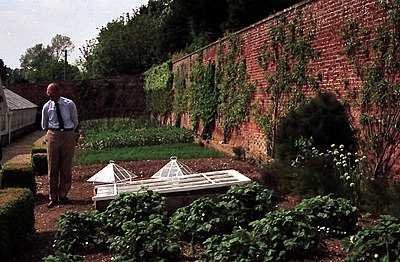
Back in the Victorian period (1800's) there were large walled gardens in each large estate in England. Food production was on a very local scale, and a team of people were employed as gardeners. All of this was new to me, but what I found especially interesting was to learn the tips and techniques from master gardeners of a hundred years ago. A time when there were no commercial fertilizers, few pesticides and a lot of attention to detail and the crop. There was no mono culture in these gardens!

The head gardener was one of the highest seniority staff members on the estate, and he was tasked with producing all of the food needed by the estate-- year round.

I have enjoyed the program, so I will organize links to the videos on you tube. I would caution you to beware of inappropriate content in the "suggested" videos area. It is sad to have good resources thrown in with the filth of a morals lacking society. Click the video link, and go full screen as soon as you can, and of course skip the ads if they are thrust upon you.

Note as of Jan 21, 2013, these video links are not working. The interview with Thoday is working which would give you an idea about the program.

April
May (first 10 mins)
July part 1, July part 2
September part 1September part 2
November

Friday, November 23, 2012

High Tunnel Greenhouse

We have launched into learning first hand about greenhouses. We have a lot to learn, but we are interested in experiencing an extra month+ on each side of our growing season, and doing more with some intensive gardening within the greenhouse.

Our philosophy at this time is to not add additional heat to a greenhouse, but rather to buffer the lows and shelter the plants from desiccation. We won't be trying to grow tomatoes and peppers (warm loving plants) in the winter, rather we will focus on cold hardy plants with the goal of keeping them going all year long.

Our greenhouse dimensions are 16 x 48 feet and is called a high tunnel because you can walk inside of it. In this post, I will outline the placement considerations, assembly steps and tips we learn along the way. You can DIY (do it yourself) where you can purchase fence poles and do your own rib bending and collect the needed hardware. We decided to start with a kit containing all of the poles, hardware and greenhouse grade plastic included.


Location Considerations

Your placement of the greenhouse is important. You want your site to be level, have good sun exposure, and be conveniently accessible to you, power and water.

We cast about in our minds various locations for the greenhouse, and have come to decide on our oldest garden plot, which is the most level ground we have in garden, and is also closest to our pole barn, power and water supply. There are some tall trees to the west of this location, but perhaps we will trim these down, or they may help shade the greenhouse in the summer when it will likely be too hot anyway.

We have brought in a load of well composted horse manure to amend to the soil and help level it out a bit more. It looks good as a plot and location to start a greenhouse.


Parts

The general parts are straightforward:
  • Anchor posts of 3 feet long are driven into the ground ~ 2 feet, with a 15" out of the ground. The anchor posts are driven along the perimeter of the greenhouse every 4 feet along the sides.
  • Hoop poles are set into the anchor posts, held with a connector tube.
  • Ridge pole attaches with hardware along the top ridge of the greenhouse
  • Plastic sheeting holder hardware is attached to the frame
  • End walls are constructed using 2x4s
  • Plastic sheeting is applied and fastened


Assembly

1) Anchors: After selecting the location for the greenhouse, you need to layout the specific corner posts, and make sure everything is square. We wanted to square the greenhouse with the road in front and the pole barn to the side, so we took some measurements, and set the front two corner posts 16 feet apart that face the road. From these we measured out the back corners, measuring 48 feet along the sides, and 50'7" on the diagonal.

A little geometry review: We want the structure to be square. This means that all of the corners need to be right angles. The Pythagorean formula for a "right angled triangle" is a2 + b2 = c2. This means that for a structure 16 x 48, the hypotenuse would measure 50'7". You measure both sides and both diagonals and make adjustments till every measurement is right. Then you set the back corner posts.

We measured the corner posts from soil line to the top of the post 15". We will use 2x12" side boards along the perimeter and 15" will leave some room above the side board for the attachment of the connector and hoop pole to the anchor post. With the four corners at the proper depth into the ground, we strung a flexible tape measure along the long sides and pounded in the side anchors every 4' and to the depth of the tape line. There is a pounding plug shown in the image which allows you to hammer the anchor in without destroying the mating surface of the pole. Once at the proper depth, you can re-orient the holes in the anchor pipe with a screw driver as shown in the image. We had a small level to help make sure we were placing the anchors straight into the ground, a feat generally accomplished.

2) Hoop poles are mated with the anchor posts. This is a fun step, as the greenhouse quickly takes "shape." There is a connector tube of about 5" long which is just large enough in diameter to slide over and onto the anchor post. There is a matching hole for a bolt to tie the connector to the anchor post. The hoop pole, being the same diameter pipe as the anchor post, also slides down into the connector tube. There is a matching hole for a bolt to tie the hoop pole onto the connector.

3) Ridge pole. The greenhouse kit that we purchased has a ridge pole of tubing that attaches a longitudinal pole with each hoop at the center. This ties the entire structure together as one unit. Larger greenhouses may have several longitudinal poles. The connection hardware is made of two brackets with a pipe holder form. Two brackets are rotated 90 degrees to accept both the ridge pole and the hoop pole. There are 4 bolts to hold the brackets together, and the nuts should be placed downward to not puncture the plastic.

4) Corner bracing. On each corner, there is a specialized pole that attaches to the second connector and the first hoop. These have a twist in them and there are right and left bracing poles (the twist is to the right or to the left.)

5) Construct the end walls. The end walls are secured to the hoops with clamps. These clamps need to be installed before the plastic holding strip is applied to the end hoops.

6) Plastic-holding strips. These are attached along the side boards, and along the hoop pole on both ends. This will tie the plastic tight to the front and back hoop along the curve, and along the base sides. The strips are metal, and are attached with 1" self tapping screws.

7) Attach the plastic. The plastic is drawn over the hoop structure as a double layer. When it is secured, there will be two layers of plastic to contend with. This allows air inflation to add some air space between the two layers as an insulating layer. You want to attach and tension the plastic at a temperature of 65 degrees. If you attach it too cold, it would loosen as it warms up. If you attach the plastic when it is hot outside, then when it gets cold, the plastic may be too tight. When the tension is achieved, Z wire is attached to hold the plastic into place.

Remember to attach the fan motor before completely securing both layers of plastic.

8) Insulate the perimeter. We applied tar paper to the outside of the 2x12, and then piled wood chips against the outside perimeter. We plan to put building styrofoam on the inside of the 2x12 to add just a bit more insulation. These will fit nicely between the anchor posts.

9) Mark out the beds. We have a 16 foot interior, and considered several arrangements for the beds and isles. We concluded with 24" beds on each outside wall, 3 walkways running the length of the greenhouse at 18" wide, and the center beds being 42". This gives us 4 distinct beds, and rather easy access to any bed, even for Sunshine and the boys to plant and harvest from the edges. We will put a work table at the back north of the greenhouse, and will make that area our start house as well.


Resources


Wednesday, November 21, 2012

Soy Milk

Gadgets can fill a kitchen. We prefer items that do not require electricity, but some of our most used appliances are electric. We recently purchased a soy milk maker, and we like it a lot.

You take 3/4 cup of dry soy beans, soak them, and then put the soft beans into the soy milk maker, and about 15 mins later, you have soy milk. You pour the milk through a strainer to collect the solids, and then add 2 T sugar, 1/4 t salt and 1/8 t vanilla. That is it! We like the result, and likely this method is costing pennies on the dollar compared to purchasing soy milk from the grocery. We have made tofu from the milk as well.

The reason for this post is not an infomercial for a soy milk maker, but to explain something that will help in eating soybeans in any form. We have found a dramatic taste improvement if we sort beans, and use only whole, intact beans. After sorting them, we prepare boiling water in a pressure cooker. We add the dry beans to the boiling water, and immediately bring them up to 15 pounds pressure. We let them cook for 15 minutes, and then set them aside to slowly cool. The result of this effort is a product that has markedly less "bean-y" flavor.

I suspect that there is an enzyme related to oxidation that causes the "bean-y" flavor. By keeping exposure to oxygen limited (whole beans), and cooking with high heat destroys the enzyme involved in oxidizing a substance in the bean. By following these two steps, we find the end product of the soy milk is much improved, and perhaps even comparable to store-purchased soy milk.

I suggest you get non-GMO (organic) soy beans for your soy milk and tofu production.

Wednesday, October 31, 2012

Peanuts

When we evaluate the things we regularly eat, it includes a lot of grains. Along with the bread we daily eat, we enjoy peanut butter. All of us like it, and it seems we can use a lot of it.

We tried our hand at growing peanuts for the first time this year. We planted the nuts into the newest garden plot, just reclaimed from a bramble and forest. The soil in this plot is very rocky, and has minimal organic content. It is actually much closer to a gravel pit than I had imagined. While the peanut is a warm loving, southern favorite, I think most of our low production volume was related to the soil conditions.

We planted 1 lb of Virginia Jumbo peanuts, and harvested around 5 lbs. Many of the plants simply did not survive, and several had been severely cropped back by grazing deer. Those that did survive looked forlorn and in need of something more than they had. I was not sure if it was general soil nutrition, lack of water or pest pressure. All through the year the plants were small and seemed weak. We were almost resigned to think the crop had not produced at all, till we located some intact plants, and upon digging them up, we found peanuts!

Looking at how large the plants should grow, I think plant spacing should be 10 inches along the row. I think these plants would like long, warm temperatures, and I bet they would really like sandy soil. The areas were we had a lot of clay, they did not seem to do well at all.

The peanut shells are located off of "pegs" or flowering stems and bend down to the soil and the peanut develops under the soil level. At flowering time, you may want to loosen soil to assure the pegs can easily grow into the soil for pod production.

Back to where I started this post: we all love peanut butter. 1/2 a cup of peanut butter has been known to be consumed in at a meal. We prefer to make our own peanut butter by grinding roasted peanuts. After grinding, we place the jars in the refrigerator, and have no issues with the oil separating out. Ground peanut butter is more compact than whole peanuts, so it takes around 2 cups of peanuts to make a cup of peanut butter.

When you consider the work required to plant, water, weed, harvest, shell, roast, salt, store, and then grind; you can see this process takes a lot of work. And when you eat as much as we do, well, it gives you an appreciation of how much effort is required for this food item. We are not discouraged by the effort level, but I do see that we need a lot more land devoted to peanuts if we are to be self sufficient. I also think that if we were truly self sufficient, we would have to use less peanut butter. The total work involved is quite high, and it likely should be a "feast food".

If you have not tried growing peanuts, I would encourage you to try them. They were no problem at all, and just need some good soil. If you live in the north, get them going as soon as you can, as they like a long growing season.


Resources:

Monday, October 8, 2012

"The harvest is Past..."

October 8, 2012 was judgement day for our summer garden. Temps fell to 31 deg just before day break this morning. Sunshine and I went out early in the morning to see how hard the frost had been. The soft and tender tomato leaves were hard and stiff with ice. It was a hard killing frost.

In past years, we have been spared till later in October, with only very light frosts that the plants could resist. The previous two years, our hard frost date were on October 22.

We walked slowly through the garden, mourning for the burst cells and dying tissue all around us. We looked at green tomatoes, green peppers, tomatillos, late corn, late potatoes, green beans still in bloom, okra, sweet potatoes. All tender and frozen hard. Still green under the coating of white frost, but the hour of judgement had come. Death was in process. When I returned to look at the plants later in the day, the tender leaves were wilted and black.

Sunshine thought of a verse: Jeremiah 8:20 "The harvest is past, the summer is ended, and we are not saved." There is a date at which the march of time will pronounce, "now is the hour of your judgement." It will come for you and I just as surely as this morning was a judgement for our summer garden. Our indifference or our lack of heart preparation will not stop the impending date. God's forbearance will have a point at which there will be no further time in which to prepare.

Are you ready for Jesus to come? Are you clean in your heart, and fit for translation? Has Jesus not only forgiven your sin, but cleaned your character for heaven? Judgement is coming. An example fell our our summer garden this morning.

Wednesday, October 3, 2012

Wheat

I do not yet have any experience planting wheat, but I do enjoy bread. We have decided it is time to learn some things about growing wheat.

Winter wheat is planted in the fall, to allow the seeds to germinate, and set some roots. Then in the spring, it is ready to go. I have read that planting wheat in the fall will offer the farmer a 3 to 4 week head start, with harvest earlier next year.

Wheat does well in the western USA with their dry early summers. This is when the grain is maturing, and a lot of rain in this time period could lead to molds and grain quality issues. Our area is not known for growing wheat, but with global warming and the midwest drought, we may be the next wheat growing belt. Anyway, we want to see how it would go.

Earlier this week, I planted a field with a new kind of wheat: Khorsan, or Kamut wheat. It is a old variety, and reportedly has low allergy symptoms for those who are allergic to wheat. We are not wheat allergic, but it may be a matter of time considering the GMO contamination in the general food supply. There is linkage to GMO foods and general increased allergy response. I am also interested in the wheat as it has a different genetic makeup, and may resist GMO wheat pollen if it were around.

I found some references that called for planting Kamut in the fall, and then another references that suggested planting it in the spring. I had a field ready, so I planted it by broadcast, and I will see if it takes and any comes up. If it freezes out, I will just replant in the spring, so no great loss. To broadcast, it is suggested to put out 1/2 of your seed volume in one direction, and then go perpendicular, and spread the remaining 1/2 of seed. This will help to give an even sowing. A small crank broadcaster is suggested, but in the old days, I am sure people just spread by hand. The more even the sowing the better.

So tuck this topic away in your mind, and we will revisit it again in the spring, and again at harvest time. I look forward to the day when I could make a loaf of bread entirely from wheat I grew. That has long been a wish of mine, like a check box on my life list of things I want to do.

Here goes!


Resources:

Monday, September 24, 2012

Kitchen Tools

If you were to outfit the perfect homestead kitchen, what would you include? This was my question to Sunshine a few days ago. This post will outline some of what we have to suggest.

She asked for what setting: On grid or off grid slants the answers quite a bit. I replied that I wanted to know everything, and she rolled her eyes. Well, here is a start to the list.


Basic categories:

1) Food cleaning / prep
2) Water supply
3) Food cooking
4) Food preservation


If you are on grid, you need to consider ways you would achieve the desired goals without power. There will be extensive and prolonged outages in the future. One way would be a self powered system such as solar power or wind / hydro power.

Some of the tools Sunshine likes best use a lot of power. She likes the VitaMix blender, and a grain grinding mill.

For cooking, we have an electric cook top and oven, a portable propane double burner, and a restored antique wood fueled cook stove.

For canning, you need glass jars and reusable canning lids.

Various pots, pans and pressure cookers are useful for everyday cooking, simmering and pressure canning.

Sunshine likes two small pressure cookers to cook rice, beans, potatoes or other long cooking items. Bringing them up to pressure cooks the food much faster.

We enjoy a food dehydrator, and these foods do perfectly in winter soups.


Wednesday, September 19, 2012

Green Beans

No garden is complete without an ample selection of legumes. That feels like a bold statement, but there you have it-- the truth! Back in May, I wrote about planting beans, and this post is a followup toward the end of the season.

Legumes are like God sent packets of goodness and nutrition. These plants not only produce healthful food, but they add nitrogen to the soil. Growing beans is like a cover crop and you get a crop out of the process! We need to focus on plants that can do this kind of wonder service in our gardens.

Protein has been the nutritional poster child for the meat industry, and scientific studies are bringing into question our need for the copious amounts of protein on our diets. That said, some protein surely is needed, and legumes are the answer for vegetarians. Legume seeds contain lots of protein. Think about the diet of a farm family like ours who desire to eat primarily from what you grow in your garden. Potatoes are a great source of starch (carbohydrates). Green leafy vegetables are power packed with nutrients, but not much carbs or protein. You need the legumes to fill in the protein part of your vegetarian diet. So you need them, and your garden needs them as well.

Many legume crops can build associations with nitrogen fixing bacteria. This combination of plant and bacteria produces more available nitrogen than is used, and results in a net plus of nitrogen to the soil. I have seen bacteria innoculants that spread the bacteria needed for this association. If you till up a new garden plot, it may be that the needed bacteria for this association may not be present, and then you would miss out on this beneficial activity for the bean plant as well as the improvement of the soil. I don't know a lot about this topic, but there are apparently a variety of strains of bacteria, and a strain of bacteria may do best with a specific legume plant. IE, if you want to add innoculant to a new field prepared for legumes, you should add the one suited for the plant you intend to grow.


2012 Garden Experience

We planted 4 rows of 80 feet each of bush beans, and 2 rows of 80 feet each of pole beans. This has been the year of pole beans, and I am a convert! Yes, I know all about the work required to get the beans up on a structure, but it is well worth the effort. The pole beans have really produced this summer, and the length of production is much longer than the bush bean. My developing opinion is that the bush bean like the Blue Lake is cultured for mass production where there is a single heavy set of beans, and then the field is mechanically harvested and the plants tilled under. Seems a waste but this is how the bush beans seem to grow. One large heavy setting, and not a long stable supply.

Our experience this year has reminded us that the bush beans will start producing earlier than the pole beans. I think the ideal for our family for the future would be 2 rows of bush and 2 rows of pole. Perhaps 4 rows of pole if we want to try to sell some beans, but beans are labor intensive. It takes some time to pick them, and compared to the machine harvested, completely automated process, there is no way to compete in price. Just an aside, but food price is way under market labor values. The only way to compete with the super market is to grow organic and have a way to mark up the price, and then only if you sell directly to the public. I will save this thread for a future muse.

Our method of supporting pole beans is worth sharing. We have tried two methods, and both have done well for us. In both methods, we drove T-posts into the ground every 8 feet down the row. Get the longest T-posts you can buy. We needed a ladder to get high enough to pound them in the ground. The first method is that we tied a metal wire to the top of the row of T-posts, and planted the beans below in the row. As the plants developed, we tied descender string hanging down to the plant for it to climb upon. This makes columns of bean plants. The second method we tried started with the same T-post foundation, but on which we supported a netting material of plastic with 6 inch squares. In this example, we have found the plants are actually spreading out more, and making a leaf wall rather than a series of columns. I actually like the netting idea fairly well.

A friend uses the netting method year after year. When I asked about clean up, they said that they do not try to remove the old vines. In the fall, the take the netting down, and roll it into a roll. Then they leave it outside to decompose the tendrils and vines that have attached to the netting. By spring they report there is some, but not a lot of residue, and that what is left is not a problem for the next years plants to grow on. Year upon year, the rotting off of old vines leads to a stable and acceptable quantity of residue. This sounds a lot better than trying to clean all the vines off the netting! We will give this method a trial this winter.

This year we have been canning beans. For canning of low acid vegetables, you will need a pressure cooker. For our locale, 25 mins at 10 lbs pressure for quart jars is suggested. If you are above 1000 feet elevation, there is an altitude correction, so be sure to take this into account. For canning, it is suggested that you let the beans develop more of the seeds for improving the protein content of the canned bean. Wait will the beans are lumpy with the developing seed in the pod, but pick the bean before the pod becomes leathery. De-string the bean and snap to a size you want for canning. I am looking forward to some beans through the winter!


Monday, September 17, 2012

Okra

Okra is a wonder plant. It is hardy, loves hot weather, will grow and put on a wonderful crop in the north, and does not require special handling or rich soils. We find it has very low pest pressure. These characteristics put this plant into our must grow category.

When I was in high school, I had the job of harvesting okra on a farm. Those plants were so spiny, that you would end up like a pin cushion after a session of picking the slender pods. The modern okra we have been planting is much improved from what I remember of those days long ago. Clemson Spineless is true to its name, and very productive.

Okra has reportedly been cultivated for thousands of years, and its origin is not sure. Some references claim northeast Africa. It is a hot loving plant, and this is evident when you try to start seeds in the soil. Where I live in the north, I have much better success starting okra in a warm, seed house environment. These seeds just don't want to germinate in cool soil. It takes several months of growth before the plants really get large and start to produce heavily. Starting them early indoors is an effective way to extend your harvest of this wonderful vegetable.

The okra plant has a beautiful flower, followed by a seed pod which grows and enlarges as it matures. As you pick the pods, you will get a feel for how large you like them. There comes a point in the pods maturity, where the cell wall of the pod becomes hard and fibrous. We like to harvest the pods before they get hard, and we find that the rage for picking is 4 to 6 inches in pod length.

Out of an 80 foot row of okra, we will harvest around 1/8 bu two times a week. That comes to around 6 meals a week with okra as a major dish of the meal. Okra has gotten a bad name because there are ways to fix okra which extenuate the perception of slime. I have not had boiled okra, and from what I hear, I may not try it. We do enjoy it as an addition to soups, but it would not be a major ingredient. Most often we cut the pods into small rounds, and saute them. In this form, they are very tasty, and can be included in a variety of entrees for a pleasant filler. We like to add some Lawry's Season Salt as we saute them.

At times I have wished for even more okra than we presently have. Perhaps I will consider two rows of 80 feet each next year! An experience from a local friend may be instructive. My friend planted four rows of okra, and on two of the rows, they added alfalfa fertilizer pellets. The rows that were fertilized did poorer than the two rows that had no amendments. This would have to be tested more to take it out of the fluke or hearsay labels, but my experience does seem to confirm that okra does not need high nutrient soil to thrive.

I hope you try some okra this next year. Do you want any of our fall seeds pods? Saving just one okra pod will yield around 50 seeds! We would love to share with you.

Friday, August 31, 2012

Clearing Land in the West

Our family took an extended vacation to the west this summer. We spent several days in Idaho and helped friends clear some forest land for their future garden plot.

The soil of the west seems very different than the soil where we currently live. Of course it was dry the time of year we visited. The soil in some areas of the west seems very fine, and perhaps of high clay content. It would readily make billowing dust with each foot step. In disturbed areas that were dry, it seemed there was 6 inches of fine dust powder.

 The forest we were clearing was almost entirely conifer. There was a mix of young and old trees in the span. Based on several days of work on it, I estimated that there were about 20 trees in a 20 x 20 foot grid. We were able to process around 4 trees per hour not counting the stump. These 4 hours included the felling of the tree with a chain saw, getting it dislodged from nearby trees and on the ground, de-limbing it, and rounding the trunk to specific lengths for stacking. The effort involved in working with the stump is much as in the East. The larger the stump, the more effort required to pull it out of the ground. With light to medium equipment, I would estimate that you could extract a stump and hour.

So to total this up: for a 20 x 20 plot, you would need to spend 5 hrs removing the trees, 1 hr for stacking the logs, 20 hrs to remove the stumps and smooth the ground. If you could keep this up, to clear a 90 x 90 garden plot would take around 10 weeks.

Our experience in the West matched what we found when we cleared land in the East. The more machine muscle you can put into the process, the faster it can be done. Now is the time to get available land cleared and ready for garden production, while you have the potential of getting large equipment in to assist in the hard tasks such as stump removal. It is possible that in some areas you could swap the equipment work for the trees / lumber removed from the land, lowering your costs.

Monday, August 6, 2012

Garden Record - 2012

Aug 6         Most everything from the garden is coming on for harvest now. Large tomatoes, okra, corn and beans. Picked about 1/2 of the first planting of corn, with a frozen yield of ___ qts. Picked 2 bu of string beans, with a frozen yield of ___ qts.

July 26         Counted up the potato early harvest: 560 lbs. This represents 6/10 of our harvest (the 15 bushels picked on the 17th.) We sorted all of the potatoes and only the firm, uncut and completely dry potatoes went into the seller for longer term storage. Our rows are 90' and 6 rows equals 540 feet, yielding just over a pound of potatoes per foot of planted row.

July 17         Harvested 15 bushels of potatoes from 6/10 of our plantings. (4/10 was planted later and is still maturing.)

July 4           We have almost completed install of our drip irrigation system. We have needed it with all the heat and dry weather! Our corn is knee high on the 4th of July.

June 1          Planted more lettuce in the shaded garden. Finished planting water mellon and cucumbers in the field.

May 20        Picked up 7 round bales of old alfalfa hay to use as mulch. With a week of no rain, and hot temps into the lower 90's, we need mulch to keep moisture in the soil. We planted 5 rows of lettuce in our forest garden plot.

May 17         We planted 12 of 15 fruit trees to complete our small orchard. We planted our beans plot, and are looking forward to see when some of them will poke through the ground. We have tilled a garden area under the forest canopy for salads and tender greens to thrive in the cooler temperatures and shade through the summer heat. We hope to plant in this area soon.

May 11         Started our orchard. Planted 3 of 15 trees. Two cherry's and one peach tree.

April 24         Bees have arrived and are installed in their two hives. First load of compost for this season: 6 yards, wet. It did not want to come out of the dump trailer, so lots of shoveling.

April 18         Planted 55 lbs of seed potatoes, 500 onion plants, 20 grape vines. Used our "middle buster" tractor implement for the first time, and like it. It makes a nice deep furrow, perfect for planting potatoes.

Chitting watermelon seeds just prior to planting.
April 17          We now have on hand 80 lbs of seed potatoes to plant. We have 500 onion plants ready to set out. We ate our first meal of morel mushrooms this year. News reports confirm our fears of weather related fruit crop damage. "Michigan Fruit Production Devastated by Bizarre Weather" is one current news title.

April 13          Planted the blueberries and strawberries today. Thanks to some friends who helped us plant!

April 10          We had snow falling today, but all melted on the ground. The wind is cold and has a bite to it! Tonight is predicted to be a hard frost, so we pray for the fruit farmers. We do not have any sensitive plants out right now, but all of the trees have leafed out, and fruit is in flower or has set. Today we pick up 300 strawberry plants, 30 blueberry plants and 30 grape vines. We trenched for the planting of our blueberry plants. Planting will be on Friday when it is predicted to be warmer.

March 29        We have beets and mach to transplant to the garden. These were started in 288 plug trays. The Lord answered, and a killing frost was averted in our immediate area. His will be done for the month of April. It may be that if the fruit trees pass the delicate flower stage without a freeze, that the setting fruit may be slightly more hardy to a light frost. Today we have been blessed by the gift of MANY raspberry plants from friends who cleaned up their patch.

March 26        Tonight, a killing frost is forecast. All tender plants need to be covered. How does a farmer cover acres of orchard? We may likely loose all flowering fruit in the next 24 hours. Pray frost damage will be minimized. We could easily loose all tree leaves this spring due to frost. Trees would be forced to reform leaves if the tender tissue is frosted. Not all trees have leafed out in our area, but April is a long month. There will likely be another or many more frosts before our normal last frost date in May arrives.

March 22         We continue to have unusually warm temps. The local fruit trees are in bloom, and this is too early, considering the likelihood of an April frost. Field seed beds are coming along nicely. We would like to get some leaf compost before we finish all seed beds. Plants started indoors: beets, lettuce, brocholli, swis chard, cabbage.

March 13-16   Transplanted lettuce and arrugula to formal 4 foot beds. Chitting peas. 1 lb of dry peas rendered over 1/2 gal volume of soaked seeds. This volume planted 2x 4 x 60 foot beds. Each bed had 2 fences of 2 rows each. (4 rows total per 4 foot bed.)